DCW DAILY BRIEF-Global Digital Assets, ScienceTech & Web3 Market Intelligence

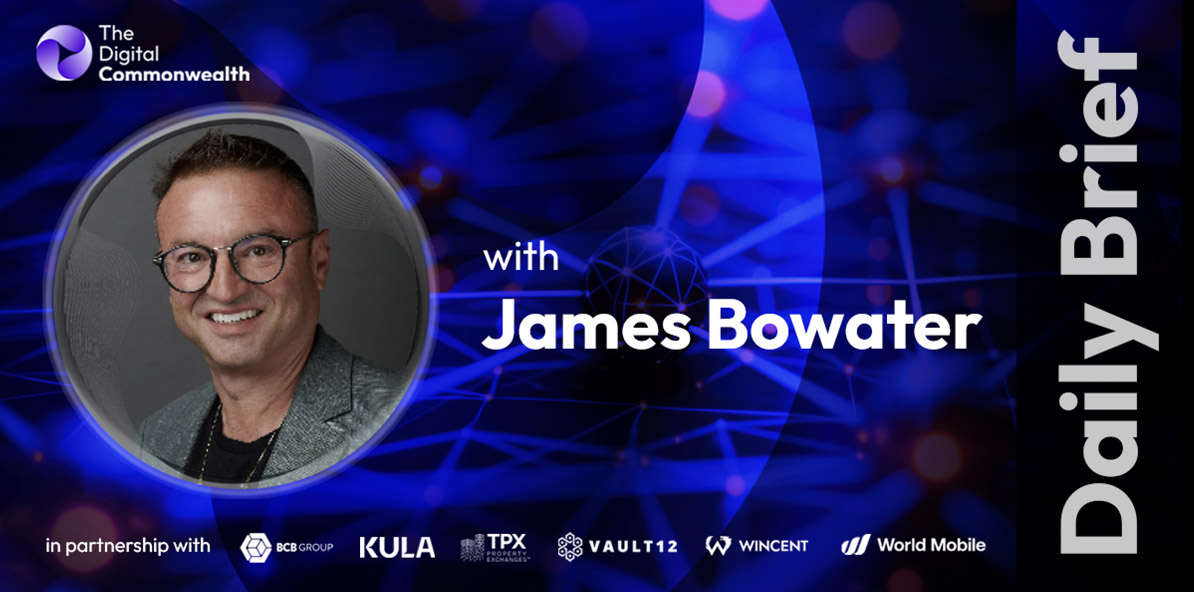
DCW DAILY BRIEF
Global Digital Assets, ScienceTech & Web3 Market Intelligence
Date: March 31st, 2026 │ Tuesday Edition #425
In partnership with BCB Group | Kula | TPX property Exchanges | Vault12 | Wincent | World Mobile
James Bowater
linkedin.com/in/james-bowater-b47612 | Twitter/X: X.com@TheDCW_JB
https://www.thedigitalcommonwealth.com/

Next Event: https://www.thedigitalcommonwealth.com/
📊 EXECUTIVE SUMMARY
Markets open on Tuesday, March 31st, 2026, Iran War Day 33, with ceasefire signals introducing the first material de-escalation sentiment of the conflict. Reports that President Trump is open to ending the Iran campaign triggered an intraday pullback in Brent crude from Monday's peak of approximately $115.90/bbl to the $107–$108 range on Tuesday. However, supply risks remain dominant as any diplomatic progress is unlikely to quickly restore flows through the Strait of Hormuz, keeping the market structurally tight. The April 6 energy-infrastructure strike moratorium and the OPEC+ April 5 ministerial meeting remain the twin geopolitical and commodity catalysts of the first week of April. Meanwhile, an Iranian-linked attack on a tanker in Dubai and continued Houthi missile activity underscore that de-escalation talk has not yet translated into operational restraint on the ground.
US equity markets are staging a modest recovery on Tuesday: the S&P 500 is trading around 6,385 (+0.26%); the Dow is approximately 45,430 (+0.58%); the Nasdaq is near 20,966 (+0.09%). VIX has eased to 30.05 (−3.22%), marginally pulling back from Monday's 31.05 high. Japan's Nikkei is on course for an 11% monthly drop, its worst since 2010, as semiconductor losses and geopolitical uncertainty weigh on risk appetite. The 10-year US Treasury yield has moved to approximately 4.35%, marginally lower than Monday's 4.44%, as some safe-haven bond demand returns on ceasefire signals. Goldman Sachs recession probability remains at 35% and rising.
Brent crude eased to ≈$108/bbl on Tuesday, pulling back from Monday's $115.90/bbl surge after ceasefire signals from the Trump administration provided initial relief. Brent remains on track for its largest monthly gain in history, approximately 59% in March, with supply risks still dominant given the structural impossibility of a rapid Hormuz restoration. WTI is near $101.42. Gold has continued to recover to ≈$4,550/oz (+0.56%), as the safe-haven bid consolidates. The 10-year US Treasury yield stands at approximately 4.35%.
Bitcoin is at approximately $67,900 (+1.2%), recovering in a broader risk-on session as ceasefire signals and the commencement of the FTX $2.2B fourth creditor distribution TODAY (March 31) provide a constructive backdrop. ETH ≈$2,065 (+3.4%); XRP ≈$1.47 (+2.5%); SOL ≈$84.50 (+1.5%); ADA ≈$0.26; DOGE ≈$0.094. Total crypto market cap ≈$2.39T; BTC dominance ≈56.2%. The Crypto Fear & Greed Index reads 28 (Fear), holding at Monday's level, as the dual catalyst of FTX distributions and ceasefire signals partially offsets the sustained Iran-driven macro risk-off.
The dominant Tuesday narrative centres on five themes: (1) Oil Eases on Ceasefire Signals; Supply Risks Remain: Brent retreats from $115.90 to ≈$108 as Trump signals openness to ending Iran campaign; tanker attack in Dubai and Houthi missiles confirm no operational de-escalation; April 6 deadline remains the binary; (2) FTX $2.2B Distribution Commences TODAY: Fourth distribution via BitGo/Kraken/Payoneer begins; primary near-term crypto liquidity catalyst; Fear & Greed at 28; whether distributed capital re-enters crypto is the defining near-term question; (3) US Labor Dept Proposes Crypto in 401(k) Plans: Rule could open $8.8 trillion in retirement assets to digital asset exposure, covering 118 million US workers the most structurally significant domestic crypto capital access catalyst of 2026; (4) FBI Confirms Iran-Linked Hack of Kash Patel Gmail; $10M Reward: Handala group confirmed; $10M FBI reward for identifying team; (5) Bitmine Acquires 71,179 ETH ($175M): Single-day corporate purchase takes total Bitmine ETH treasury to 4.73M ETH; advances 'Alchemy of 5%' strategy.
Oil Eases on Ceasefire Signals; Brent ≈$108/bbl; FTX $2.2B Distribution Begins TODAY; US Labor Dept Proposes Crypto in 401(k) Plans:
Reports that President Trump is open to ending the Iran campaign triggered an intraday Brent pullback from $115.90 to ≈$108; supply disruption risks remain dominant as Hormuz restoration would take months even under a ceasefire framework; an Iranian-linked tanker attack in Dubai and continued Houthi missile strikes confirm there is no operational de-escalation on the ground; the April 6 energy-infrastructure moratorium expiry and the OPEC+ April 5 ministerial meeting remain the highest-known-risk event window of Q2 2026.
FTX $2.2B Distribution TODAY (March 31): The fourth FTX creditor distribution of approximately $2.2 billion commences today via BitGo, Kraken, and Payoneer; total FTX creditor recoveries now approach $10 billion across all rounds; Class 5B US customers at 100% cumulative recovery; Class 7 convenience claims at 120%; historical analysis of prior distributions suggests 40–60% of distributed capital returns to crypto markets within 30 days.
US Labor Dept Proposes Crypto in 401(k) Plans: The US Department of Labor has proposed a rule that could allow cryptocurrencies to be included in 401(k) retirement plans; the rule would provide a framework for fiduciaries to consider digital assets alongside private equity and private credit; if adopted, the policy could affect approximately 721,000 retirement plans covering over 118 million US workers and nearly $8.8 trillion in assets the single most structurally significant domestic crypto capital access reform proposed in 2026.
FBI Confirms Kash Patel Gmail Hack; $10M Reward; Bitmine Acquires 71,179 ETH ($175M): FBI confirms Iran-linked Handala group hacked FBI Director Kash Patel's personal Gmail account; $10M reward issued for information leading to identification of Handala Hack Team; Bitmine Immersion Technologies (BMNR) acquires 71,179 ETH via dark pool institutional blocks, taking total ETH treasury to 4.73 million ETH and advancing CEO Tom Lee's 'Alchemy of 5%' strategy to control 5% of circulating ETH supply.
📰 TODAY'S HEADLINES
💹 MARKETS
- Brent crude retreats to ≈$108/bbl on ceasefire signals; down from Monday's $115.90 peak; WTI near $101; record monthly gain of ≈59% still on track: Reports that President Trump is open to ending the Iran campaign provided the first major de-escalation signal of the conflict, pulling Brent crude from Monday's high of approximately $115.90/bbl to the $107–$108 range on Tuesday; WTI has held near $101.42; the monthly gain remains on track to exceed 59% in March the strongest monthly performance on record; supply risks remain structurally elevated as any ceasefire agreement would take months to restore Hormuz flows; an Iranian-linked attack on a tanker in Dubai and ongoing Houthi missile activity confirm no operational de-escalation has occurred; the OPEC+ April 5 meeting and April 6 Iran deadline remain the next critical dual-binary event window.
- US equities staging modest recovery: S&P 500 ≈6,385 (+0.26%); Dow ≈45,430 (+0.58%); Nasdaq ≈20,966 (+0.09%); VIX eases to 30.05 (−3.22%): US equity markets are recovering modestly on Tuesday as ceasefire signals partially offset the sustained macro risk-off environment; the S&P 500 is up approximately 0.26% after Friday's −1.67% close at 6,368.85; the Dow has recovered 0.58%; the Nasdaq has edged 0.09% higher; VIX has pulled back from Monday's 31.05 to 30.05, reflecting marginally reduced tail-risk pricing; Japan's Nikkei is on course for an 11% monthly drop, its worst since 2010, as semiconductor losses and geopolitical uncertainty drag on risk appetite; Goldman Sachs recession probability remains at 35%.
- Gold consolidates at ≈$4,550/oz (+0.56%); 10-year US Treasury eases to 4.35%; ceasefire signals partially reduce safe-haven premium: Gold has continued recovering to approximately $4,550/oz, extending Monday's rebound from the liquidity-driven sell-off; the 10-year US Treasury yield has eased marginally to approximately 4.35% from Monday's 4.44%, as ceasefire signals restore some risk appetite and reduce emergency safe-haven bond demand; the metal remains more than 15% below its January $5,595 all-time high; Goldman Sachs maintains its year-end gold target of $5,400; J.P. Morgan projects $6,000 under continued dollar-diversification scenarios.
- Brent on track for record 59% monthly gain; supply disruption structural regardless of ceasefire signals; Hormuz restoration timeline measured in months: Even with ceasefire signals, the structural supply disruption from the Iran conflict is not reversible in the near term; Qatar Energy has reported Iranian missile strikes reduced LNG export capacity by 17%; Iraq's force majeure on foreign-operated oilfields remains active; Russia's reduced export capacity compounds multi-source supply contraction; a diplomatic agreement would take months to restore physical Hormuz transit flows; Goldman Sachs's rule that every $10/bbl rise in oil adds 0.3% to US CPI means the 59% March gain has materially exceeded the OECD's 4.2% US 2026 CPI revision.
⚖️ REGULATORY & POLICY
- US Labor Department proposes rule to allow crypto in 401(k) retirement plans; $8.8 trillion in retirement assets potentially unlocked: The US Department of Labor has proposed a new rule that could allow cryptocurrencies to be included in 401(k) retirement plans, representing the most structurally significant domestic crypto capital access reform proposed in 2026; the rule provides a framework for plan fiduciaries to consider allocating retirement savings to alternative assets including cryptocurrencies, private equity, and private credit; if adopted, the policy could affect approximately 721,000 retirement plans covering more than 118 million US workers and nearly $8.8 trillion in assets; even small allocation shifts toward digital assets could translate into meaningful capital flows into crypto markets; the proposal represents a departure from earlier guidance urging fiduciaries to exercise extreme caution regarding cryptocurrency exposure.
- NFL moves to block Kalshi and Polymarket contracts over manipulation risks; prediction markets' sports expansion faces regulatory headwinds: The National Football League has sent letters to prediction market platforms including Kalshi and Polymarket, seeking to block event-based contracts tied to football outcomes including announcer statements, player signings, coach firings, and injury-related events; the move reflects growing concern from professional sports leagues over contracts that could be influenced by a limited number of actors or anticipated before public disclosure; the NFL's intervention signals a broader effort by leagues to shape how prediction markets engage with sports-related data as these platforms expand beyond politics and macro events; the development adds regulatory overhang to a sector already facing the advancing PREDICT Act in Congress.
- GENIUS Act advancing toward July 18; CLARITY Act Senate Banking Committee markup approaching second half of April; Fed CBDC rejection remains structural tailwind for private stablecoins: The GENIUS Act continues to advance toward its July 18 target, with the Federal Reserve's definitive ruling out of a digital dollar CBDC strengthening the structural case for private stablecoin issuers; stablecoin market cap remains above $150 billion; the CLARITY Act Senate Banking Committee markup remains targeted for the second half of April; DCW members in the UK cryptoasset sector face dual-track MLR/FSMA 2000 authorisation decisions ahead of the 30 September 2026 gateway opening and the 25 October 2027 new regime start.
- OPEC+ April 5 ministerial meeting; Saudi Arabia supply decision critical in context of ceasefire signals and dual binary with April 6 Iran deadline: The OPEC+ ministerial meeting scheduled for April 5 one day before Trump's April 6 Iran deadline has acquired further strategic complexity following Tuesday's ceasefire signals; if a diplomatic framework emerges before April 6, Saudi Arabia faces a decision on whether to accelerate production in coordination with a ceasefire or maintain supply discipline; Saudi Red Sea export routes via Yanbu remain exposed to Houthi re-engagement; the April 5/April 6 dual-binary event structure remains the highest-known-risk catalyst window of Q2 2026.
🤖 TECHNOLOGY & INNOVATION
- FBI confirms $10M reward after Iran-linked Handala group hacks FBI Director Kash Patel's personal Gmail; critical infrastructure and government security implications: The FBI has confirmed that hackers compromised Director Kash Patel's personal Gmail account and that email data has been accessed; the FBI stated that 'the information in question is historical in nature and involves no government information'; the Iran-linked hacktivist group Handala (also known as Handala Hack and Hatef) which was also behind recent Stryker medical device attacks has claimed responsibility; the FBI has confirmed a $10 million reward is available for information leading to the identification of the Handala Hack Team; the incident underscores the escalating Iranian cyber campaign alongside the kinetic military conflict, with implications for enterprise cyber risk frameworks and critical infrastructure protection.
- Wise launches UK current accounts with 3.26% yield, targeting idle bank cash; structural challenge to traditional banking deposit model: Wise is expanding beyond its core money transfer business with the rollout of UK current accounts, available to its 3 million UK users and business clients; the offering introduces features associated with primary banking relationships direct debits, debit cards, and interest-bearing balances at 3.26% yield alongside access to more than 20 sets of local bank details across 70+ countries; the move represents a structural extension of Wise's model from FX alternative to primary banking provider; for DCW members in the digital payments and fintech sector, the product signals accelerating convergence between cross-border payment infrastructure and domestic banking.
- Prediction markets reach 2.47% of crypto spot volume; NFL challenges Kalshi/Polymarket sports contracts; event-based trading sector faces dual regulatory and league-level headwinds: Prediction markets now account for approximately 2.47% of total crypto spot trading volume, a meaningful rise from negligible levels in earlier market cycles; the NFL's move to restrict sports-related contracts at Kalshi and Polymarket adds a new dimension to the regulatory pressure the sector already faces from the advancing PREDICT Act in Congress; leading venues have processed tens of billions in cumulative trading volume; the sector's expansion into sports, entertainment, and commercial domains is generating organised pushback from incumbent industries and legislators simultaneously.
🏢 INSTITUTIONAL & CORPORATE
- FTX $2.2B fourth creditor distribution commences TODAY (March 31) primary near-term crypto liquidity catalyst now live: The FTX Recovery Trust fourth distribution of approximately $2.2 billion has commenced today via BitGo, Kraken, and Payoneer, representing the single most significant near-term crypto-specific liquidity event; total FTX creditor recoveries will approach $10 billion across all four rounds; Class 5B US customers reach 100% cumulative recovery; Class 7 convenience claims receive 120% including interest; eligible creditors should expect funds within 1–3 business days from today; the distribution coincides with ceasefire signals, creating a constructive dual backdrop whether distributed capital re-enters crypto markets or sits in USD will determine the near-term BTC price response above the $67,000–$68,000 range.
- Bitmine Immersion Technologies (BMNR) acquires 71,179 ETH ($175M) in single-day purchase; total ETH treasury reaches 4.73 million ETH: Bitmine Immersion Technologies announced the acquisition of 71,179 Ethereum via a series of dark pool institutional blocks to minimise market slippage, funded through existing cash reserves and new senior secured notes; the $175 million transaction takes Bitmine's total Ethereum treasury to over 4.73 million ETH, further consolidating its position as the world's leading 'Ethereum Treasury Company'; CEO Tom Lee described the move as core to the firm's 'Alchemy of 5%' strategy aiming to eventually control 5% of the total circulating supply of Ethereum; by accumulating ETH during the current market consolidation phase, Bitmine is positioning as a foundational 'layer-zero' participant in the decentralised economy.
- Dunamu (Upbit operator) reports 10.2% revenue decline in 2025; Virtual Asset User Protection Act increases operational costs; CEO signals institutional pivot: Dunamu Inc., operator of South Korea's largest cryptocurrency exchange Upbit, reported a 10.2% decline in total operating revenue for 2025 to 2.2 trillion won ($1.63 billion), down from 2.45 trillion won; the contraction is attributed to a 'prolonged stabilisation' in retail trading volumes and the impact of the Virtual Asset User Protection Act, which has significantly increased operational costs for domestic exchanges; despite the revenue decline, Dunamu maintained net profit of 805 billion won; CEO Sirgoo Lee stated the era of 'exponential retail growth' may have peaked and the company is transitioning toward a more sustainable institutional-led business model.
- El Salvador Bitcoin holdings continue accumulation above 7,600 BTC (≈$510M at current prices); sovereign strategy intact amid market volatility: El Salvador's Bitcoin holdings continue to exceed 7,600 BTC with an estimated market value above $510 million at current prices; the government's commitment to Bitcoin integration within its broader financial framework remains intact; the consistent accumulation strategy through both the war-driven price volatility and the IMF agreement adjustments represents the most durable sovereign accumulation signal even as global sentiment toward sovereign crypto adoption remains mixed.
📈 MARKET OVERVIEW
🌐 TOTAL CRYPTO MARKET CAP: ≈$2.39 TRILLION
24h Change: Modest recovery across majors as ceasefire signals ease macro pressure; FTX $2.2B distribution begins TODAY; Brent ≈$108/bbl (down from $115.90 peak); Nikkei worst month since 2010; Fear & Greed ≈28 (Fear). Bitcoin Dominance: ≈56.2%
₿ BITCOIN (BTC) Price: ≈$67,900 (+1.2%; FTX Distribution Day; Ceasefire Signals Provide Modest Lift) (⬆)
24h Volume: ≈$28.4B │ Market Cap: ≈$1.35 Trillion │ Dominance: ≈56.2% │ 24h Range: ≈$66,500–$68,300
Bitcoin is at approximately $67,900, recovering +1.2% on Tuesday as ceasefire signals reduce the acute panic premium in risk assets, and the commencement of the FTX $2.2B fourth creditor distribution provides a constructive near-term liquidity backdrop. The recovery from Monday's session continues to hold above the $66,500–$67,000 demand floor that institutional participants have defended throughout the conflict period. The key analytical question for today is whether FTX-distributed capital, historically estimated at 40–60% to re-enter crypto markets within 30 days, generates an observable bid above the $68,000–$68,500 resistance zone. Key near-term catalysts: (1) FTX $2.2B distribution NOW LIVE primary liquidity catalyst; (2) ceasefire signal strength whether Trump's openness translates into a formal framework by April 6; (3) April 6 energy-infrastructure deadline still the defining geopolitical binary; (4) OPEC April 5 meeting supply stance under evolving diplomatic conditions; (5) institutional demand floor at $65,000–$67,000 continuing to hold through the deepest fear cycle since 2022. Key support: $65,000–$66,500; resistance: $68,500–$70,000. Goldman's recession probability of 35% and rising remains the primary macroeconomic constraint.
Ξ ETHEREUM (ETH) Price: ≈$2,065 (+3.4%; Bitmine 71,179 ETH Purchase; BlackRock ETHB Decision Approaching April)
24h Volume: ≈$17.8B │ Market Cap: ≈$249 Billion │ 24h Range: ≈$1,990–$2,080
Ethereum is at approximately $2,065, outperforming Bitcoin with a +3.4% gain on Tuesday, driven in part by Bitmine Immersion Technologies' announcement of a $175 million single-day ETH acquisition, the most significant single-day corporate purchase of the current fiscal year. The purchase brings Bitmine's total ETH treasury to 4.73 million ETH and signals that large institutional buyers are accumulating at current levels. The approaching April SEC decision on BlackRock's ETHB staking ETF remains the dominant near-term institutional catalyst. Ethereum's 61.4% share of tokenised real-world assets ($206B+) remains the strongest concrete indicator of institutional adoption. Critical support: $1,990–$2,000; a sustained daily close above $2,100 is required to confirm a trend reversal.
🔷 XRP Price: ≈$1.47 │ 24h Volume: ≈$2.3B │ Market Cap: ≈$85B
XRP is at approximately $1.47, up +2.5% on Tuesday, recovering alongside the broader market as ceasefire signals and reduced macro fear provide a constructive session. The market continues to process the outcome of the SEC's 240-day maximum statutory deadline, which expired on March 27, with XRP's modest price recovery in the aftermath consistent with partial ETF-approval pricing. RLUSD (Ripple's stablecoin) continues to maintain its market cap above $1 billion. The XRP Ledger Ecosystem remains among the top protocol-level performers. Critical support: $1.35–$1.40; resistance: $1.55–$1.64.
◎ SOLANA (SOL) Price: ≈$84.50 (+1.5%; Agentic Internet Infrastructure; Alpenglow Upgrade On Schedule) │ 24h Volume: ≈$3.9B │ Market Cap: ≈$48.4B
Solana is at approximately $84.50, recovering +1.5% in Tuesday's risk-on session. Despite near-term price pressure, Solana's structural narrative continues to strengthen: the Solana Foundation's positioning as core infrastructure for the emerging 'agentic internet' remains a differentiated institutional thesis; Solana processed a record $650 billion in stablecoin volume in February 2026, surpassing Ethereum and Tron; the Alpenglow consensus upgrade (100–150ms finality; 98.27% validator approval) remains on schedule; Morgan Stanley's SOL ETF application is under SEC review. The $83–$85 support zone is being tested; a recovery above $88–$90 is needed to maintain constructive technical structure.
🔺 CARDANO (ADA) Price: ≈$0.26 │ 24h Volume: ≈$510M │ Market Cap: ≈$9.6B
Cardano is at approximately $0.26, recovering modestly in Tuesday's session. The SEC's digital commodity classification, which confirms ADA staking is not a securities event, remains a structural positive. The Midnight privacy partner chain mainnet, Circle's USDCx stablecoin integration (the first institutional-grade native stablecoin for the Cardano ecosystem), and Leios scaling (targeting approximately 1,000 TPS) are the 2026 medium-term catalysts. The $0.25–$0.26 floor is under ongoing pressure in the current risk-off environment but held during Monday's flush.
💛 DOGECOIN (DOGE) Price: ≈$0.094 (Highest-Beta Macro Risk Barometer; X Money April Launch) │ 24h Volume: ≈$1.2B │ Market Cap: ≈$14.5B
Dogecoin is at approximately $0.094, recovering marginally from Monday on ceasefire signals. DOGE's Fear & Greed reading remains in 'Extreme Fear' territory, reflecting the sustained pressure of the Iran conflict and the Nasdaq's continued correction. The X Payments/X Money launch in April (with crypto-native design lead Benji Taylor), the Dogecoin issuance reduction proposal (cutting annual block rewards by 90%), and the SEC/CFTC commodity classification remain the medium-term structural catalysts. DOGE requires a genuine macro risk-on signal—specifically, a ceasefire announcement or a major liquidity catalyst—to re-engage retail speculative demand—critical support: $0.088–$0.092.
😨 Crypto Fear & Greed Index: 28 (Fear)
Tuesday's Fear & Greed reading of 28 (Fear) holds at Monday's level, up from yesterday's session low of 23 (Extreme Fear), as ceasefire signals and the commencement of the FTX $2.2B distribution provide a constructive dual catalyst. The reading remains within the historical range associated with the deepest capitulation phases; the current streak of sub-25 readings is the longest since the FTX collapse in late 2022. Glassnode data across all instances where the index fell below 10 shows that in approximately 65–70% of cases, Bitcoin posted positive 30-day forward returns averaging +18–22%. The critical near-term question is whether the FTX distribution generates observable crypto re-entry demand sufficient to push the index above 30 (transitioning from Fear to the lower end of Neutral), which would represent the first sustained sentiment recovery of the conflict period. The April 6 deadline and the OPEC April 5 meeting create the next dual catalyst window.
🏛️ TRADITIONAL MARKETS CONTEXT
Tuesday's session represents the first meaningful de-escalation signal of the Iran conflict period, with ceasefire reports introducing a partial reversal of Monday's extreme risk-off sentiment. Brent crude's pullback from $115.90 to ≈$108 is the clearest expression of this, a $7–$8/bbl reduction in the acute conflict premium on reports that Trump is open to ending the Iran campaign. However, this de-escalation signal must be assessed against the reality of structural supply disruption: even a ceasefire agreed today would require months to restore physical Hormuz transit flows, meaning Brent's structural floor has risen materially above pre-conflict levels of approximately $73/bbl. The ceasefire signal is tactical relief, not structural resolution.
Japan's Nikkei, heading for an 11% monthly drop, its worst since 2010, remains the single most important equity market signal of the conflict period's macroeconomic damage. Japan's structural vulnerability, 95% crude import dependence, JGB yields at multi-decade highs, and yen depreciation, creating an imported inflation spiral, create an extreme sensitivity to every incremental oil price development. The 10-year US Treasury yield's marginal easing to 4.35% from Monday's 4.44% reflects some reallocation from equities to bonds on ceasefire hopes. Still, the fundamental stagflation bind, inflation demanding higher rates while growth deterioration demands lower rates, remains unresolved. The OECD's 4.2% US 2026 CPI revision and Goldman's 35% recession probability continue to define the macro constraint.
Gold's consolidation at ≈$4,550 (+0.56%) reflects the dual forces now competing for the safe-haven bid: the de-escalation signal reduces the pure war premium, but the structural uncertainty, as ceasefire talks have not yet produced a framework, and kinetic activity continues with the Dubai tanker attack and Houthi missiles sustain demand. The 10-year US Treasury yield at 4.35% continues to create an opportunity cost headwind for non-yielding gold. Goldman Sachs maintains its year-end target of $5,400; J.P. Morgan projects $6,000 under continued dollar-diversification scenarios, both presupposing that the structural safe-haven and dollar-diversification rationale ultimately overwhelms the yield headwind.
💡 DCW INTELLIGENCE & INSIGHTS
Iran War Day 33: Ceasefire Signals, the FTX Liquidity Event, and the US Labour Dept's 401(k) Crypto Proposal.
First, the ceasefire signal must be disaggregated from the ceasefire reality. President Trump's reported openness to ending the Iran campaign has produced a meaningful market response. Brent's $7–$8/bbl pullback from Monday's peak is the most significant single-session de-escalation in the conflict's pricing. However, DCW members should model this as a negotiating-position signal rather than an operational framework. Iranian-linked tanker attacks in Dubai and continued Houthi missile activity on the same day as the ceasefire reports confirm that no operational stand-down has been ordered. The April 6 energy-infrastructure moratorium remains the most important near-term binary: the signal from Trump's reported openness suggests a ceasefire framework could emerge at or around that deadline, but the distance between signalling and implementation in an active multi-front conflict of this complexity is substantial. The OPEC+ April 5 meeting acquires additional strategic weight: Saudi Arabia's production decision will now be made in the context of active ceasefire diplomacy, making their stance even harder to predict, flood the market, anticipating lower prices post-deal, or maintain discipline given ongoing structural uncertainty.
Second, the FTX $2.2B distribution is live today, and the next 72 hours are analytically critical. The distribution commenced via BitGo, Kraken, and Payoneer. Historical analysis of the first three FTX distributions suggests that approximately 40–60% of distributed capital returns to crypto markets within 30 days, representing $880 million to $1.32 billion in potential fresh demand. The critical test is whether the Fear & Greed Index begins recovering from its current 28 (Fear) reading toward the 35–40 range as distributed capital enters the market. Simultaneously, the ceasefire signal provides a more constructive backdrop than Monday's Houthi escalation environment. DCW members managing digital asset portfolios should monitor BTC's response to today's distribution as the definitive near-term empirical test of institutional demand resilience: a sustained move above $68,500 would be the first signal that the distribution is generating net new crypto demand rather than being converted into fiat.
Third, the US Labour Department's 401(k) crypto proposal is the most structurally significant domestic crypto capital-access reform proposed in 2026. The proposal's framing as a fiduciary framework rather than a mandate is strategically important: it places the compliance burden on plan administrators who are already accustomed to navigating alternative asset frameworks for private equity and credit rather than requiring legislative change. The $8.8 trillion addressable asset base and 118 million US workers covered create an addressable market for digital asset exposure that dwarfs the $100B+ currently in spot BTC ETFs. Even a 0.5% shift in allocation from 401(k) assets to Bitcoin would represent approximately $44 billion in new institutional demand. DCW members advising institutional clients and asset managers should begin modelling the implications for the compliance architecture immediately: fiduciaries will need investment policy statement amendments, digital asset custody frameworks, and potentially new MiFID/ERISA-equivalent due diligence protocols before allocating. The proposal's departure from earlier guidance urging 'extreme caution' on cryptocurrency signals a structurally different US regulatory posture that is likely to persist regardless of the resolution of the Iran conflict.
🔴 ELEVATED RISKS: Geopolitical, Macro & Market
🟢 POSITIVE DEVELOPMENTS: Structural & Regulatory
Ceasefire Signal ≠ Ceasefire Reality: Trump's openness is a negotiating signal; tanker attack in Dubai and Houthi missiles confirm no operational de-escalation; April 6 remains a critical binary; structural Hormuz supply disruption lasts months post-deal
FTX $2.2B Distribution LIVE TODAY (March 31): Fourth distribution via BitGo/Kraken/Payoneer begun; total recoveries approach $10B; 40–60% historical capital re-entry rate; primary near-term crypto liquidity catalyst now active; Class 7 at 120% recovery
Brent ≈$108/bbl Still Structurally Elevated; Monthly Gain ≈59% Record: Supply disruption is structural, not tactical; every $10/bbl rise adds 0.3% US CPI per Goldman; OECD 4.2% revision already exceeded at peak; stagflation bind deepens.
US Labour Dept Proposes Crypto in 401(k) Plans: $8.8 trillion addressable retirement asset base; 118 million US workers; structural capital access reform; departure from prior 'extreme caution' guidance; fiduciary framework approach lowers implementation barrier
Japan Nikkei Worst Month Since 2010; VIX 30; Goldman 35% Recession Probability: Import-dependent Japan most exposed G7 economy; 10yr JGB at multi-decade highs; yen depreciation inflation spiral; all 2026 Fed cuts priced out; 40–50% hike probability by September
Bitmine 71,179 ETH Acquisition ($175M); ETH Treasury 4.73M: Largest single-day corporate ETH purchase of 2026; 'Alchemy of 5%' strategy signals long-term institutional accumulation conviction; ETH +3.4% outperforms BTC on Tuesday
Fear & Greed at 28 (Fear); BTC Below $68K; Record 59-Day Sub-25 Streak: Longest extreme fear streak since FTX collapse; BTC 45% below $126K ATH; ETF outflows resumed; leveraged long exposure creates stop-loss vulnerability
GENIUS Act Advancing July 18; CLARITY Act April Markup; BlackRock ETHB ETF April Decision: Regulatory pipeline intact; FCA FSMA 2000 gateway September 2026; stablecoin market cap above $150B; XRP ETF inflows $1.44B since November 2025
🌍 GLOBAL MONETARY POLICY & MACROECONOMIC
Tuesday's ceasefire signal introduces the first material de-escalation variable into the G4 central bank stagflation bind. Brent's pullback from $115.90 to ≈$108/bbl, if sustained, would imply a modest reduction in the conflict's cumulative CPI impact. Goldman Sachs's rule that every $10/bbl rise in oil prices adds 0.3% to US CPI implies that the ≈$7–$8/bbl retreat removes approximately 0.21–0.24% from the implied CPI trajectory. However, the OECD's 4.2% US 2026 CPI revision was computed against Brent levels well below $115/bbl, indicating the oil shock has already materially exceeded the OECD's severe-scenario assumptions. The partial ceasefire relief does not restore any meaningful probability of Fed easing in 2026: the market continues to price a 40–50% probability of a hike by September, with all 2026 cuts fully priced out.
Japan remains the most acutely exposed G7 economy: 95% crude import dependence, Nikkei on course for an 11% monthly drop (worst since 2010), JGB 10-year yield at multi-decade highs reflecting the Bank of Japan's diminishing capacity to suppress yields in the face of imported inflation, and yen depreciation creating a self-reinforcing inflation-depreciation spiral. Tuesday's marginal 10-year US Treasury yield easing to 4.35% from 4.44% reflects some bond safe-haven demand returning on ceasefire signals, but does not alter the fundamental stagflation constraint. China's continued insulation via Iranian oil access and the yuan-denominated Hormuz toll system creates an increasingly visible Indo-Pacific economic divergence from Western market exposure. The Trump-Xi summit in May remains the geopolitical wildcard that could reframe the multilateral architecture around access to Hormuz.
The April 6 deadline now coincides with the OPEC+ April 5 ministerial meeting, the highest-known-risk dual-catalyst event window of Q2 2026. Tuesday's ceasefire signal adds a third variable to this binary structure: if diplomatic progress is genuine, the April 5 OPEC meeting could produce a coordinated supply-increase signal to help normalise energy markets; if the ceasefire signal proves premature, the Saudi supply decision becomes even more consequential as the single remaining supply-side offset to the ongoing Hormuz disruption. DCW members should model all three scenarios for April 5–6: (a) ceasefire framework + OPEC supply increase (Brent potentially retracing toward $95–$100; significant risk-asset relief); (b) ceasefire talks collapse + OPEC withholds capacity (Brent tests $125+; $147/bbl 2008 record moves from tail to base case); (c) ambiguous diplomatic status + OPEC holds current policy (Brent range-bound at $108–$115; sustained stagflation pressure).
📰 Other News Stories
- US equity markets Tuesday: S&P 500 ≈6,385 (+0.26%); Dow ≈45,430 (+0.58%); Nasdaq ≈20,966 (+0.09%); VIX 30.05 (−3.22%); 10yr Treasury ≈4.35%; Nikkei worst month since 2010 (−11%); modest recovery on ceasefire signals vs. sustained macro headwinds
- Brent ≈$108/bbl Tuesday (down from Monday's $115.90 peak) on Trump ceasefire signal; WTI ≈$101.42; monthly Brent gain ≈59% on track for record; tanker attack in Dubai and Houthi missiles confirm no operational de-escalation; April 6 deadline and OPEC April 5 remain the dual binary
- Gold ≈$4,550/oz (+0.56%) as safe-haven bid consolidates; 10yr Treasury ≈4.35% (marginally lower); Goldman year-end target $5,400; J.P. Morgan projects $6,000; silver recovering; global bond yields elevated as all 2026 Fed cuts priced out with 40–50% hike probability by September
- BTC ≈$67,900 (+1.2%); ETH ≈$2,065 (+3.4%); XRP ≈$1.47 (+2.5%); SOL ≈$84.50 (+1.5%); ADA ≈$0.26; DOGE ≈$0.094; total market cap ≈$2.39T; BTC dominance ≈56.2%; Fear & Greed ≈28 (Fear); FTX $2.2B distribution LIVE TODAY
- FTX $2.2B fourth distribution commences TODAY (March 31) via BitGo, Kraken, and Payoneer; total recoveries approach $10 billion; Class 5B US customers at 100% cumulative recovery; Class 7 convenience claims at 120%; fifth distribution scheduled May 29, 2026
- US Labor Department proposes rule to allow crypto in 401(k) retirement plans; 721,000 plans; 118 million US workers; $8.8 trillion in assets; fiduciary framework approach; departure from prior 'extreme caution' guidance; most significant domestic crypto capital access reform of 2026
- FBI confirms $10M reward after Iran-linked Handala group hacks Kash Patel's personal Gmail; FBI states 'information is historical in nature and involves no government information'; Handala also behind recent Stryker medical device attacks; confirms escalating Iranian cyber campaign alongside kinetic conflict
- Bitmine Immersion Technologies (BMNR) acquires 71,179 ETH ($175M) via dark pool institutional blocks; total ETH treasury reaches 4.73 million ETH; CEO Tom Lee's 'Alchemy of 5%' strategy advancing; funded through cash reserves and new senior secured notes; ETH +3.4% on Tuesday
- NFL sends letters to Kalshi and Polymarket seeking to block contracts tied to football outcomes (announcer statements, player signings, coach firings, injury events); concerns over manipulation by limited actors; prediction markets' sports expansion faces organised league pushback; PREDICT Act advancing in Congress
- Dunamu (Upbit) reports 10.2% revenue decline in 2025 to 2.2 trillion won ($1.63B); Virtual Asset User Protection Act increases operational costs; net profit 805 billion won maintained; CEO Sirgoo Lee signals institutional-led business model pivot from 'exponential retail growth' era
- Wise launches UK current accounts with 3.26% yield; available to 3 million UK users; direct debits, debit cards, 20+ local bank details; structural extension from FX alternative toward primary banking provider; accelerating convergence of cross-border payment infrastructure with domestic banking
- Ethereum holds 61.4% share of tokenised real-world assets globally ($206B+); BlackRock ETHB staking ETF SEC decision approaching April; Glamsterdam hard fork targeting May; Bitmine's 4.73M ETH treasury reinforces institutional conviction in ETH infrastructure role
- GENIUS Act advancing toward July 18; CLARITY Act Senate Banking Committee markup second half of April; FCA FSMA 2000 gateway opens 30 September 2026; practical MLR cut-off 31 July 2027; stablecoin market cap above $150B; Morgan Stanley SOL ETF under SEC review
📊 The Crypto Narrative
- Iran War Day 33 ceasefire signal provides first de-escalation relief; Brent retreats $7–$8/bbl to ≈$108; supply disruption structural regardless; April 6 / OPEC April 5 dual binary remains the highest-risk event window of Q2 2026; tanker attack in Dubai and Houthi missiles confirm no operational stand-down
- FTX $2.2B fourth distribution LIVE TODAY via BitGo/Kraken/Payoneer; total recoveries ≈$10B; 40–60% historical re-entry rate implies $880M–$1.32B potential fresh crypto demand; whether distributed capital bids BTC above $68,500 is the defining near-term empirical test of institutional demand resilience
- US Labor Dept 401(k) crypto proposal: $8.8T addressable asset base; 118M workers; fiduciary framework approach; structural departure from prior 'extreme caution' guidance; even 0.5% allocation = ≈$44B new institutional demand; most significant domestic crypto capital access reform of 2026
- Bitcoin ≈$67,900 (+1.2%); holding institutional demand floor $65,000–$67,000; ETF outflows resumed; Fear & Greed at 28 (Fear); Bitfinex record long 79,300 BTC contrarian signal intact; 59-day sub-25 Fear streak longest since FTX collapse
- Ethereum ≈$2,065 (+3.4%); Bitmine acquires 71,179 ETH ($175M); total Bitmine treasury 4.73M ETH ('Alchemy of 5%'); BlackRock ETHB staking ETF SEC decision approaching April; Ethereum holds 61.4% of tokenised RWA ($206B+); Glamsterdam hard fork targeting May
- XRP ≈$1.47 (+2.5%); processing post-240-day deadline outcome; RLUSD market cap above $1B; seven live XRP ETFs with $1.44B cumulative inflows since November 2025; CLARITY Act Senate markup April to codify commodity classification into law
- SOL ≈$84.50 (+1.5%); Alpenglow upgrade on schedule; record $650B stablecoin volume February 2026; Morgan Stanley SOL ETF under SEC review; agentic internet infrastructure positioning the differentiated institutional thesis through the conflict period
- Bitmine (BMNR) ETH holdings at 4.73 million tokens ($175M new purchase); 'Alchemy of 5%' strategy via dark pool institutional blocks; MAVAN staking solution launched; Morgan Stanley SOL ETF under SEC review; Ethereum Glamsterdam hard fork targeting May; US Labour Dept 401(k) crypto proposal most significant domestic capital access reform of 2026
📅 Looking Ahead March–April 2026
Key Events and Catalysts:
This Week and Immediate:
The FTX $2.2B creditor distribution, commencing TODAY (March 31), is the week's primary crypto-specific catalyst and is now live. The distribution via BitGo, Kraken, and Payoneer represents the largest single-event capital injection to meet potential crypto re-entry demand during the current conflict period. The ceasefire signal and the April 6 Iran deadline create the dominant geopolitical binary: de-escalation (the ceasefire framework emerges at or around April 6, Brent retreats toward $95–$100) versus re-escalation (talks collapse, Houthis expand operations, Trump's oil seizure advances). The OPEC+ April 5 ministerial meeting is the immediate pre-deadline catalyst for commodities. Saudi Arabia's production decision will now be made in the context of active ceasefire diplomacy. Watch points: (a) whether FTX distribution generates observable crypto market bid above $68,000–$68,500; (b) whether ceasefire signal strengthens into a formal framework before April 6; (c) OPEC production stance under the evolving diplomatic backdrop; and (d) whether the US Labor Dept 401(k) proposal generates institutional compliance preparation announcements in the near term.
March–April 2026:
The April 6 Iran energy-infrastructure strike moratorium is the next geopolitical binary now overlapping with the OPEC April 5 meeting in a dual-catalyst first-week-of-April structure. Tuesday's ceasefire signal has introduced a third variable: the probability of a diplomatic framework emerging at the April 6 deadline has materially increased. The BlackRock ETHB staking ETF SEC decision is approaching in April. X Money launches in April with crypto-native design infrastructure. The FCA's FSMA 2000 authorisation gateway opens on 30 September 2026, with DCW members in the UK crypto sector needing to finalise their MLR/FSMA pathway strategy before the 31 July 2027 practical cut-off. GENIUS Act advancing toward July 18. CLARITY Act Senate Banking Committee markup targeted for the second half of April. Morgan Stanley SOL ETF application under SEC review. Ethereum's Glamsterdam hard fork is targeting May. CONV£RGENCE London at Mansion House (April 22nd) convenes at the height of the Iran war's impact on macro and digital asset markets.
Q2 2026 Broader Themes:
Tuesday's ceasefire signal as the first material de-escalation development of the conflict period the question of whether it translates into an operational framework by April 6 is the defining geopolitical variable for Q2; the FTX $2.2B distribution as the near-term counterweight to Extreme Fear sentiment whether distributed capital re-enters crypto will determine whether the Fear & Greed index begins recovering from 28 toward 35–40; the US Labor Dept 401(k) crypto proposal as the single most structurally significant domestic crypto capital access reform of the year implementation timeline and industry compliance preparation will shape the medium-term institutional demand outlook; the dual April 5 OPEC/April 6 Iran binary as the single highest-known-risk event window of Q2 2026; the OECD's 4.2% US CPI revision and Goldman's 35% recession probability as the twin macro constraints defining risk asset trajectory through Q2; and CONV£RGENCE London at Mansion House on April 22 as DCW's flagship convening at the precise peak of this geopolitical and digital asset inflection moment.
CONV£RGENCE London and The Digital Commonwealth Awards 2026 in partnership with Datavault AI, Inc.
Where the World's Digital Future Comes Together at Mansion House, London.
Limited number of tickets available via the link
🎟️ 🔗 https://luma.com/8weeiwua
At the heart of the City of London, The Digital Commonwealth convenes the innovators, policymakers, and investors shaping the next era of responsible digital growth.
DCW's CONV£RGENCE 2026 London Forum at Mansion House (April 22nd) will convene leading voices at the intersection of these converging themes.
ℹ️ About The Digital Commonwealth
The Digital Commonwealth Limited (DCW) is an independent industry organisation representing AI, Blockchain, DePIN, Digital Assets, ScienceTech, and Web3 sectors across our Community. Through strategic initiatives, including the Mansion House Summit Series, DCW Weekly Roundup research, DCW Cover insurance services, DCW Frontier Focus newsletter, and comprehensive advisory functions, we drive innovation, education, and collaboration across the digital economy ecosystem.
DCW's mission is to facilitate dialogue among industry stakeholders, policymakers, and regulators, whilst providing members with cutting-edge research, networking opportunities, and market intelligence. Our events bring together leading voices from traditional finance, technology innovation, and regulatory bodies to advance thoughtful frameworks supporting responsible digital asset adoption. Through DCW Cover, we address the critical insurance needs of participants in the digital economy, whilst our research publications provide authoritative analysis of regulatory developments, market trends, and technological innovation shaping the future of finance.
📧 Contact Information
Email: info@thedigitalcommonwealth.com
Website: https://www.thedigitalcommonwealth.com/
Twitter/X: X.com@TheDCW_X
⚠️ Disclaimer
This briefing is provided for informational purposes only and does not constitute investment advice, financial advice, trading advice, or any other sort of advice. The Digital Commonwealth Limited does not recommend that any cryptocurrency or digital asset be bought, sold, or held by you. Conduct your own due diligence and consult your financial adviser before making any investment decisions. Past performance is not indicative of future results.
The information contained in this briefing has been compiled from sources believed to be reliable. Still, DCW makes no representation or warranty, express or implied, as to its accuracy, completeness, or correctness. All views and opinions expressed herein are those of the authors and do not necessarily reflect the views of The Digital Commonwealth Limited or its affiliates.
EAJW © 2026 The Digital Commonwealth Limited. All rights reserved.


