DCW DAILY BRIEF-Global Digital Assets, ScienceTech & Web3 Market Intelligence

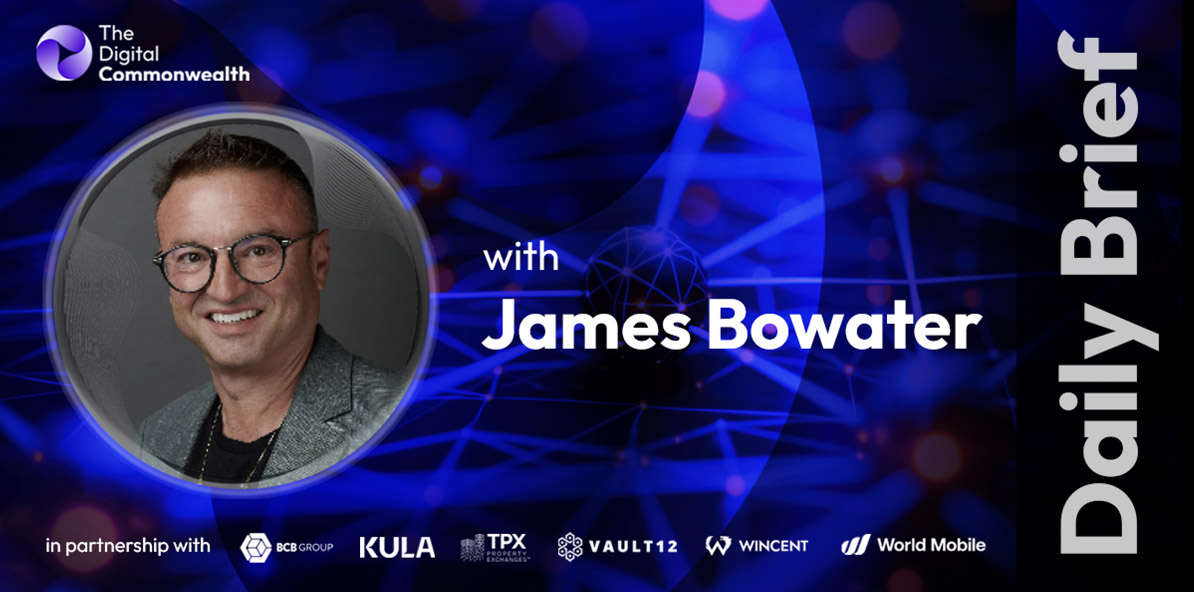
DCW DAILY BRIEF
Global Digital Assets, ScienceTech & Web3 Market Intelligence
Date: March 17th, 2026 │ Tuesday Edition #415
In partnership with BCB Group | Kula | TPX property Exchanges | Vault12 | Wincent | World Mobile
James Bowater
linkedin.com/in/james-bowater-b47612 | Twitter/X: X.com@TheDCW_JB
https://www.thedigitalcommonwealth.com/

Next Event: https://www.thedigitalcommonwealth.com/
📊 EXECUTIVE SUMMARY
Markets open Tuesday, March 17th, 2026, Iran War Day 17 under renewed selling pressure as Iran intensified its missile and drone offensive against Gulf states overnight, erasing a significant portion of Monday's diplomatic optimism. Israel announced Tuesday that a strike on Monday killed Gholamreza Soleimani, commander of the IRGC's all-volunteer Basij force, a major escalation step that Iran has not yet formally acknowledged. Qatar intercepted a second wave of Iranian missile attacks on Monday, while Saudi Arabia shot down 35 Iranian drones targeting its eastern region, home to the kingdom's core oil installations. Smoke was observed near Dubai International Airport following strikes.
Selective Hormuz transit openings are expanding. The Aframax tanker Karachi carrying Abu Dhabi Das crude became the first non-Iranian cargo to transit the strait while broadcasting an AIS signal, confirming that bilateral passage agreements are widening beyond India and Turkey to include UAE-linked cargoes. The diplomatic corridor model established by India's Modi-Pezeshkian negotiations is gradually scaling up. Still, Iran's simultaneous escalation across the Gulf states illustrates the dual-track nature of Tehran's strategy: selective rewards for non-aligned nations combined with continued maximum pressure on US-linked infrastructure.
US and global equities are selling off on Tuesday morning. The S&P 500 fell to 6,706 (−1.0%), the Dow to 46,902 (−1.1%), and the Nasdaq to 22,403 (−1.4%) as the VIX spiked to 26.77 (+10.5%), reversing Monday's relief rally driven by diplomatic optimism and NVIDIA GTC announcements. Monday's session saw the S&P rally to approximately 6,775, its strongest single-day performance in weeks, before Tuesday's renewed geopolitical escalation prompted a broad de-risking move.
The Reserve Bank of Australia delivered a landmark rate decision: the RBA hiked 25 basis points to 4.10% in a 5-4 split vote, the first non-unanimous decision since July last year, and the first major central bank tightening in direct response to the Iran war oil shock. Governor Michele Bullock warned that recession is not off the table if inflation is not brought to heel, with higher fuel costs from the Middle East conflict adding to already elevated domestic price pressures. Major banks now forecast another 25bp hike in May.
Brent crude eased to ∼$101.60–103 from Monday's ∼$106 peak as partial Hormuz transit openings and IEA strategic reserve releases provided marginal market relief. Still, the structural disruption of approximately 20 mb/d of crude and product exports remains unresolved. WTI futures traded at ∼$95.20 (+2.96% on the session). Gold held at ∼$5,151/oz (−0.5%), with rate-cut suppression continuing to offset safe-haven demand.
Bitcoin corrected to ∼$69,570–71,054 (−1.4–1.9%), pulling back from Monday's six-week intraday high of ∼$74,300–75,000 as the renewed escalation in Iran reversed the geopolitical sentiment tailwind. Ethereum held above $2,350 (+8.3% on a rolling 24h basis) as the SuperTrend Buy signal confirmed a structural altcoin rotation. XRP surged to $1.58 (+9.9%), SOL to $95.26 (+4.3%), and DOGE to $0.10 (+6.2%) as the altcoin market built on Monday's momentum despite the BTC pullback.
The dominant Tuesday narrative centres on five intersecting themes: (1) Iran War Day 17 re-escalation: Basij commander killed; Qatar/UAE/Saudi intercepting Iranian waves; Karachi tanker first AIS-broadcasting non-Iranian transit; (2) RBA hikes 25bps to 4.10%: first major central bank to tighten in response to the oil shock; 5-4 split; recession warning from Governor Bullock; (3) FOMC Day 1 underway: meeting opened today (March 17), decision tomorrow (March 18) at 2 PM ET; hold near-certain (92%+) but dot plot language on 2026 rate path is the critical variable; (4) NVIDIA GTC Day 2 announcements: NemoClaw open-source AI agents platform confirmed; Vera Rubin seven new chips launched; DLSS 5 unveiled; space-based data centres teased; new vehicle and robotics AI platforms; (5) BTC corrects while altcoins hold: ETH SuperTrend Buy signal holds; XRP +9.9%; SOL +4.3% the altcoin rotation thesis from Monday's ETH breakout is continuing into Tuesday's session.
Iran War Day 17: Israel kills Basij commander Gholamreza Soleimani; Qatar intercepts 2nd missile wave; Saudi Arabia shoots down 35 drones targeting eastern oil region; smoke near Dubai Airport. Karachi tanker (Abu Dhabi crude) becomes the first non-Iranian cargo to transit Hormuz with AIS on. Iran continues its dual-track strategy: selective bilateral openings + maximum pressure on Gulf states.
Oil: Brent ∼$101.60–103/bbl (easing from Monday's ∼$106 peak); WTI ∼$95.20 (+2.96%); IEA 400Mb strategic release active. Gold ∼$5,151/oz (−0.5%). 10-year Treasury yield 4.24% (+0.74%)—dollar index 99.66.
Tuesday equities: S&P 500 6,706 (−1.0%); Dow 46,902 (−1.1%); Nasdaq 22,403 (−1.4%); VIX 26.77 (+10.5%), reversing Monday's relief rally. RBA hikes by 25 bps to 4.10% (5-4 vote; first non-unanimous since July 2025); Governor Bullock warns of a possible recession. FOMC Day 1 underway, decision March 18 (hold 92%+ probability; dot plot critical).
Bitcoin ∼$69,570–71,054 (−1.4–1.9%, pulling back from Monday's $74,300–75,000 intraday peak); ETH ∼$2,356 (SuperTrend Buy signal holds); XRP ∼$1.58 (+9.9%); SOL ∼$95.26 (+4.3%); DOGE ∼$0.10 (+6.2%). Total market cap ∼$2.58T; BTC dominance ∼56–57%; Fear & Greed ∼39–41 (Fear).
NVIDIA GTC Day 2: NemoClaw confirmed (open-source AI agents); Vera Rubin 7 chips launched; DLSS 5 (AI photorealistic gaming); space-based data centres teased; Vehicle & Robotics AI platforms announced. Visa launches Agentic Ready programme issuer trials with 20+ UK/European banks for AI agent-initiated payments. HMRC pre-market engagement on cryptoasset investigation services launched.
📰 TODAY'S HEADLINES
💹 MARKETS
- US equity markets reversed Monday's relief rally in Tuesday morning trade: S&P 500 fell to 6,706 (−1.02%); Dow to 46,902 (−1.09%); Nasdaq to 22,403 (−1.38%); VIX spiked to 26.77 (+10.47%), as renewed Iranian escalation the killing of Basij commander Soleimani, Gulf-state missile waves, and smoke near Dubai Airport unwound Monday's diplomatic optimism; Monday had delivered the strongest single-session rally in weeks, with the S&P gaining ∼1.7% from Friday's multi-month low of 6,663, before Tuesday's geopolitical reversal; the 10-year Treasury yield rose to 4.239% (+7bps), reflecting continued inflation concerns ahead of tomorrow's FOMC dot plot.
- Asian markets closed mixed Tuesday amid the dual narrative of selective Hormuz openings and Iran's intensifying Gulf-state strikes: the continued AIS-broadcasting Karachi tanker transit provided limited positive signal for energy supply, but Saudi Arabia's oil-region drone intercepts and Qatar's second missile wave kept structural risk-off intact; the yen held near ¥160/USD ahead of Thursday's Bank of Japan decision; South Korea and Japan equities both underperformed given their acute Hormuz LNG and crude exposure.
- Brent crude eased to ∼$101.60–103/bbl (−1.5–2.2% from Monday's highs of ∼$104.63–106) as the Karachi tanker transit provided modest supply relief signal, IEA's 400 million barrel strategic reserve release began flowing, and Saudi Arabia's pipeline alternatives (East-West Pipeline to Yanbu) partially offset the Hormuz deficit; WTI futures at ∼$95.20 (+2.96% on the day); CBOE Crude Oil Volatility Index remains above 120 the highest since the 2020 negative oil price crisis; the structural disruption of approximately 20mb/d remains unresolved.
⚖️ REGULATORY & POLICY
- Iran War Day 17: Israel announced Tuesday it killed Gholamreza Soleimani, commander of the IRGC Basij force a paramilitary unit historically used to suppress domestic protests in a strike on Monday; Iran did not immediately acknowledge the death; the Basij is a key internal security and mobilisation force, making Soleimani's killing an escalation with both military and political dimensions; separately, Qatar intercepted a second wave of Iranian missile attacks on Monday, the UAE's Defence Ministry announced interception operations, and Saudi Arabia destroyed 35 Iranian drones targeting its oil-rich eastern region; a Palestinian civilian was killed in Abu Dhabi by an Iranian missile.
- The Reserve Bank of Australia hiked 25 basis points to 4.10% in a landmark 5-4 split decision the RBA's first non-unanimous vote since July 2025 and the first major central bank tightening move in direct response to the oil shock: Governor Michele Bullock acknowledged the Middle East conflict's contribution to fuel-driven inflation while clarifying that the primary driver was domestic excess demand; she warned that recession was "not impossible" if inflation was not brought under control; all four major Australian banks now forecast another 25bp hike at the May meeting, which would be the first three-consecutive-meeting tightening cycle since March 2023; cash rate now at 4.10%, up from 3.85%.
- FOMC Day 1 of the March 17–18 meeting is underway in Washington today; policy statement and Chair Powell press conference scheduled for 2:00 PM and 2:30 PM ET tomorrow (March 18); CME FedWatch shows 92%+ probability of a hold at 3.50–3.75%; the real focus is the Summary of Economic Projections (dot plot) the first to incorporate $100+ oil-shock inflation dynamics; High Frequency Economics Chief Economist Carl Weinberg called for a rate hike at this meeting to pre-empt oil-shock inflation potentially reaching 3.5% by summer; PCE core inflation at 2.9% YoY (January); unemployment at 4.4%; Q4 2025 GDP revised to +0.7%.
- The Karachi Aframax tanker carrying Abu Dhabi Das crude transited the Strait of Hormuz on Sunday while broadcasting its AIS signal the first non-Iranian cargo to do so confirming that the bilateral exemption model is scaling: India (two LPG tankers), Turkey (at least one vessel), Pakistan (Pakistani-flagged Karachi), and now UAE-linked cargoes have all obtained selective transit clearances; Iran Foreign Minister Araghchi reiterated the strait is "open to all except the US and its allies" the strategic framework remains bilateral reward for non-US-aligned nations; 1,000+ tankers remain stranded on both sides; UKMTO maintains maritime threat level at 'critical'.
🤖 TECHNOLOGY & INNOVATION
- NVIDIA GTC Day 2 delivered a wave of major product announcements from Jensen Huang: NemoClaw open-source AI agents platform launched (brings security/privacy guardrails to OpenClaw agents, emphasising enterprise adoption); the Vera Rubin platform put seven new chips into production for AI training and inference; DLSS 5 unveiled using AI to generate photorealistic lighting and materials in games in real time, with Bethesda, Capcom, and Ubisoft as launch partners; an open-source Agent Toolkit for enterprises to build secure AI agents announced; Huang teased space-based data centres; new AI platforms for autonomous vehicles and robotics confirmed; Huang's strategic framing: NVIDIA as 'the first vertically integrated but horizontally open company.'
- Visa launched its Agentic Ready programme issuer trials for AI agent-initiated payments with more than 20 UK and European bank partners: early partners include Barclays, HSBC UK, Nationwide, Revolut, Banco Santander, Commerzbank, Raiffeisen Bank International, Eurobank, and others; the programme gives issuers hands-on experience validating agent-initiated transactions in production environments, using Visa's tokenisation, identity, and risk infrastructure; Mathieu Altwegg (Visa Europe): 'As AI agents increasingly shape how people shop and buy, payments need to keep up.'
🏢 INSTITUTIONAL & CORPORATE
- HMRC launched a pre-market engagement exercise seeking supplier input on cryptoasset investigation services, signalling a material expansion of the UK tax authority's crypto enforcement capability: services under consideration include blockchain tracing software licences, specialist forensic investigative support for complex crypto cases, and APIs enabling investigators to query blockchain data at scale and in near real time; the initiative aims to strengthen HMRC's ability to detect and investigate cryptoassets used in money laundering and tax evasion; represents a significant step toward institutionalised crypto tax enforcement in the UK.
- A critical Android security vulnerability was disclosed affecting approximately 875 million devices one in four Android phones enabling hackers to bypass locked and protected handsets in under 60 seconds: the vulnerability has significant implications for crypto self-custody users holding seed phrases or hardware wallet PINs on Android devices; security researchers advised immediate OS updates and recommended against using compromised devices for digital asset management; the disclosure adds to the growing list of mobile security risks intersecting with digital asset custody.
- Bitcoin miners pivoting to AI infrastructure continue to attract capital amid the geopolitical uncertainty: IREN rose 6%, Galaxy Digital 8%, and Cipher Mining 7% on Monday following Nebius inking a $27 billion deal with Meta for AI compute; TeraWulf secured a $500 million senior secured bridge facility led by Morgan Stanley to fund its Hawesville, Kentucky data centre, with shares up ∼12%; the miner-to-AI-infrastructure pivot is emerging as the structural trade of the Iran war period, with AI compute demand providing a floor under mining equities independent of crypto prices.
📈 Market Overview
🌐 TOTAL CRYPTO MARKET CAP: ∼$2.58 TRILLION
24h Change: Mixed ─ BTC −1.5%, ETH +8.3%, Altcoins broadly positive │ Bitcoin Dominance: ∼56–57%
₿ BITCOIN (BTC) Price: ∼$69,570–71,054 (pulling back from Monday's six-week intraday high)
24h Volume: ∼$36B │ Market Cap: ∼$1.40–1.43 Trillion │ Dominance: ∼56–57% │ 24h Range: ∼$69,000–$74,300
Bitcoin pulled back to ∼$69,570–71,054 on Tuesday, declining 1.4–1.9% from Monday's closing range of ∼$72,500–73,000, as Iran's renewed offensive against Gulf states the killing of Basij commander Soleimani, drone attacks on Saudi Arabia's eastern oil region, and the second Qatar missile intercept reversed the geopolitical sentiment improvement that had driven Monday's six-week intraday high of ∼$74,300–75,000. The BTC futures market is reflecting a reversal of the de-escalation, with March futures at 69,870 (−1.35% on the session as of late morning EDT). The pullback comes despite the altcoin market showing continued strength (ETH +8.3%, XRP +9.9%), indicating BTC-specific selling pressure related to its role as the primary instrument for geopolitical sentiment pricing. Bitcoin futures open interest at 687,200 BTC remains near its highest since February 25, suggesting institutional positioning is intact. The $70,000 psychological support level is the critical floor a sustained close below would test the $67,000–68,000 zone. The 50-day EMA at ∼$73,000 remains the near-term resistance if the diplomatic narrative recovers.
Ξ ETHEREUM (ETH) Price: ∼$2,356 (+8.3% rolling 24h, SuperTrend Buy signal holding)
24h Volume: ∼$24B │ Market Cap: ∼$284 Billion │ 24h Range: ∼$2,200–$2,380
Ethereum extended its breakout from Monday's SuperTrend Sell-to-Buy flip, trading at ∼$2,356 and maintaining the gains of its strongest single-day performance in weeks. The SuperTrend indicator, which flipped from Sell to Buy for the first time since September 2025, has historically preceded moves of 52% and 174% in prior instances, and the signal is holding into Tuesday's session despite BTC's pullback, confirming that this is an altcoin rotation move rather than simply a BTC-correlated bounce. ETH is outperforming BTC by approximately 9% on a rolling 24-hour basis. The $2,300–$2,450 zone is the next technical target on a sustained break and close above the current levels. Structural catalysts remain intact: Pectra upgrade pending, Glamsterdam hard fork (May), BlackRock ETHB staking ETF SEC review (April), and the Ethereum Foundation's treasury management programme (5,000 ETH OTC to BitMine at $2,098 last week), establishing an institutional conviction floor.
🔷 XRP Price: ∼$1.58 (+9.9%) │ 24h Volume: ∼$3.5B │ Market Cap: ∼$91B
XRP surged to $1.58 (+9.9%) on Tuesday, the largest single-day gain among major assets, extending Monday's 3% advance on broadening crypto momentum. Volume jumped sharply. The move through $1.55 reclaims territory lost during the March sell-off and re-targets the $1.65–$1.70 resistance zone. RLUSD stablecoin remains above $1B market cap. XRPL real-world asset transfers continue their trajectory of institutional adoption, with transfers up +1,280% over 30 days. The GENIUS Act's continued legislative progress toward its July 18th deadline provides the structural regulatory tailwind for XRP's payments infrastructure thesis. The $1.90 upper channel boundary remains the full recovery target signal.
◎ SOLANA (SOL) Price: ∼$95.26 (+4.3%) │ 24h Volume: ∼$4.2B │ Market Cap: ∼$51B
Solana extended its gains through $95 (+4.3%) on Tuesday, building on Monday's breakout above $90. DeFi TVL remains above $8.1 billion with an average daily DEX volume of $2.07 billion. SOL's deeply negative funding rate, the highest short-squeeze setup among major L1S, is gradually unwinding as the price rises, validating the thesis that any sustained de-escalation signal would trigger an outsized SOL recovery. The Alpenglow consensus upgrade (100–150ms finality, approved by 98.27% of validators) and Morgan Stanley's SOL ETF application, under SEC review, remain the dominant medium-term catalysts. The $95–$100 zone is the current critical resistance cluster; a sustained break above $100 would signal that the structural recovery is underway.
🔺 CARDANO (ADA) Price: ∼$0.27–0.28 │ 24h Volume: ∼$550M │ Market Cap: ∼$9.9B
Cardano held above $0.27 on Tuesday, consolidating the trendline breakout confirmed last week. The $0.24–0.25 structural support floor held through all 17 days of the Iran war, a notable show of resilience. On-chain data and derivatives metrics suggest structural support from accumulation at current levels. Protocol Version 11, the Midnight privacy partner chain mainnet, and Leios scaling targeting ∼1,000 TPS remain the 2026 catalysts. The $0.33–0.35 recovery target zone remains intact on the medium-term technical picture.
💕 DOGECOIN (DOGE) Price: ∼$0.10 (+6.2%) │ 24h Volume: ∼$1.4B │ Market Cap: ∼$14.5B
Dogecoin broke through the $0.10 psychological resistance level on Tuesday (+6.2%), the primary recovery target identified in Monday's brief, as the altcoin rotation from ETH and XRP's gains spread into sentiment-sensitive assets. The break above $0.10 is technically significant: it converts former resistance into potential support. DOGE remains the highest-beta asset for any geopolitical de-escalation signal, and Tuesday's move, occurring despite BTC's pullback, suggests the market is pricing an altcoin recovery independent of BTC's Iran-sensitive consolidation. The $0.12–0.13 zone is the next resistance cluster.
😊 Crypto Fear & Greed Index: ∼39–41 (Fear) Holding steady as BTC pulls back, but altcoin strength provides a partial offset. Tuesday's Fear & Greed reading remains in the Fear zone (∼39–41), little changed from Monday's 39 despite BTC's pullback from its six-week intraday high. The divergence between BTC (−1.5%) and the altcoin complex (ETH +8.3%, XRP +9.9%, SOL +4.3%, DOGE +6.2%) is the cycle's defining feature in this session: smart money accumulated ETH, XRP, and SOL through the conflict period at historically suppressed valuations, and the Monday SuperTrend signal has triggered the structural altcoin rotation that was forecast as the first recovery indicator. The BTC pullback is consistent with profit-taking following Monday's $115M short liquidation, rather than a resumption of the bearish trend. On-chain BTC ETF inflows for the week of March 9–13 totalled $767M (third consecutive positive week), and institutional positioning via Strategy Inc.'s 738,731 BTC holding and Metaplanet's 210,000 BTC accumulation target remain the structural floor.
🏛️ Traditional Markets Context
Monday's session delivered the strongest single-day recovery in three weeks across all major US indices, but Tuesday reversed those gains. Monday closed: S&P 500 ∼6,775 (+1.7% from Friday's 6,663 multi-month low); Dow ∼47,417 (+1.8%); Nasdaq recovered from its five-consecutive-day losing streak. The catalyst was dual: Trump's confirmation of US-Iran diplomatic back-channel contact and the Indian/Karachi tanker transit, confirming that bilateral passage negotiations were scaling. Tuesday opened with broad de-risking as the Basij commander's killing, Saudi Arabia's drone intercepts, and smoke near Dubai Airport re-priced the Iran war's escalation trajectory. S&P 500 fell to 6,706 (−1.0%); Dow to 46,902 (−1.1%); Nasdaq to 22,403 (−1.4%). VIX at 26.77 (+10.5%). The 10-year Treasury yield rose to 4.239% (+7bps). The Dollar Index is at 99.66 (+0.2%). The S&P 500 remains approximately 2.5% below its year-to-date high, with the 6,663 level from Friday as the critical support level to watch.
The FOMC opens its two-day meeting today (March 17), the most consequential central bank decision of 2026 thus far. The hold is near-certain at 3.50–3.75% (CME FedWatch 92%+). Still, the Summary of Economic Projections will deliver the Fed's first explicit guidance on how policymakers are incorporating a $100+ oil environment into the 2026 rate path. If the dots shift hawkishly, reducing projected 2026 cuts from one to zero, or introducing a rate hike projection, the implied inflation timeline extends, suppressing rate-sensitive assets. The BoJ (Thursday), ECB (Thursday), and BoE (Thursday) complete the most consequential central bank week of 2026. The RBA's 5-4 hike to 4.10% earlier today is the first live data point: the oil-shock inflation transmission into central bank policy is not theoretical, it has materialised.
📦 Commodities
🥇 Gold: ∼$5,151/oz (−0.5%)
- Holding ∼$5,151/oz as oil-driven inflation suppresses rate-cut expectations and supports dollar, limiting gold's real-yield appeal
- Third consecutive week of pressure from the oil-yield interaction effect
- J.P. Morgan $6,300 year-end target and Deutsche Bank $6,000 remain structurally intact; near-term suppression persists while FOMC dot plot remains hawkish
- Rate-cut probability for June 2026: ∼20–23% (Bloomberg)
⚪ Silver & Platinum: Consolidating
- Silver pulling back from conflict-peak levels near ∼$97/oz
- Dollar holding near recent highs provides silver headwind
- CBOE Crude Oil Volatility Index above 120, the highest since the 2020 negative oil crisis, keeping precious metals complex under pressure
- Platinum is also retreating from conflict risk premium highs
🛢️ Brent: ∼$101.60–103/bbl (Easing slightly)
- Easing from Monday's ∼$104.63–106 on Karachi tanker transit and IEA strategic reserve release
- WTI futures ∼$95.20 (+2.96% on session); 52-week range $54.98–$113.41
- Saudi Arabia's eastern oil region targeted by 35 Iranian drone interceptions, successful; regional energy infrastructure risk elevated
- Goldman $130/bbl tail-risk scenario still in play if Kharg oil infrastructure is struck directly
📝 Market Narrative & Analysis
Tuesday, March 17th, 2026, opens as the first test of whether Monday's diplomatic optimism was a durable shift or a temporary sentiment relief trade. The answer, so far, is the latter. The killing of Gholamreza Soleimani, commander of the Basij, Iran's paramilitary internal security and mobilisation force, is a deliberate Israeli escalation aimed at degrading Iran's domestic coercion capability and long-range mobilisation capacity. Iran's near-term response calculus is complicated by its already-stretched missile and drone arsenal (Saudi Arabia intercepting 35 drones on Monday alone). Still, the assassination of a senior IRGC commander historically triggers retaliatory escalation cycles that extend the conflict timeline.
The selective Hormuz transit model is simultaneously scaling. The Karachi tanker's AIS-broadcasting transit of the first non-Iranian cargo to use the signal is analytically significant beyond the single vessel: it confirms that Iran is granting passage to UAE-linked cargoes, expanding the bilateral exemption framework beyond India and Turkey. This creates a de facto multi-track system: nations maintaining diplomatic distance from the US coalition are gradually gaining access to Hormuz; the structural closure of US-allied commercial shipping remains intact. The bilateral passage model is Iran's leverage maximisation strategy, rewarding non-aligned nations while maintaining economic pressure on the Western alliance.
Today's RBA decision is the most important monetary policy signal of 2026 to date, not for Australia specifically, but as the first revealed policy function for how a central bank responds to an oil-shock-driven inflation surge during an active geopolitical conflict. The 5-4 vote is critical: it demonstrates that central bank consensus is breaking down amid the oil shock, with four members (nearly half the board) arguing for caution amid war-driven uncertainty. Governor Bullock's recession warning, given without a formal projection, is the most honest communication from any major central bank this cycle. It frames the oil-shock dilemma precisely: failing to hike risks entrenching inflation; hiking risks a recession in an already strained consumer environment. The FOMC faces the same binary tomorrow.
Bitcoin's pullback from $74,300 to ∼$70,000 is consistent with the geopolitical pricing mechanism identified in Monday's brief: BTC is functioning as a conflict-duration instrument, rising on de-escalation signals and falling on escalation events. The altcoin market's divergence from BTC on Tuesday, ETH holding its SuperTrend gains, XRP surging by 9.9%, and DOGE breaking $0.10 are structural signals that the altcoin rotation thesis is decoupling from BTC's geopolitical sensitivity. This bifurcation is characteristic of late-stage recovery cycles: BTC consolidates while accumulated smart money rotates into higher-beta assets that had underperformed during the defensive period. DCW members should monitor whether this bifurcation holds into tomorrow's FOMC announcement. A hawkish dot plot could reverse gains in both BTC and altcoins, while a dovish or neutral hold could trigger the next BTC recovery leg toward $75,000–78,000.
💸 Stablecoins, Tokenisation & Regulatory Frameworks
The GENIUS Act continues its legislative trajectory toward the July 18th stablecoin deadline, with USDC demand rising and Circle stock maintaining positive momentum amid the conflict. RLUSD held above a $1B market cap through 17 consecutive days of market stress during the Iran war, demonstrating that stablecoin infrastructure is functioning as designed during the most acute geopolitical disruption in the digital asset era. HMRC's pre-market engagement for cryptoasset investigation services, seeking blockchain tracing software, forensic investigative support, and blockchain query APIs, signals that the UK tax authority is building enforcement capabilities that assume crypto use in money laundering and tax evasion will continue to grow. This is consistent with the regulatory maturation trajectory DCW has been tracking: increased enforcement capability typically follows, and reinforces, primary regulatory framework development (UK FCA crypto regime, EU MiCA). Bitcoin reserve bills continue advancing in Arizona, Missouri, Texas, and Indiana. The CLARITY Act's projected mid-2026 passage remains the structural catalyst for digital asset regulation.
🤖 Technology, AI & Innovation
NVIDIA GTC Day 2 continued to define the AI infrastructure super-cycle's Q1 2026 moment. Jensen Huang's strategic positioning of NVIDIA as 'the first vertically integrated but horizontally open company' frames every announcement in a unified thesis: own the compute and platform infrastructure, open everything built on top of it. NemoClaw's confirmation as an open-source AI agents platform is the most consequential software announcement: it embeds NVIDIA's security and governance framework into enterprise AI agent deployment at the protocol level, making NVIDIA indispensable to the enterprise AI stack regardless of which model provider they use. DLSS 5's AI-driven, photorealistic gaming capability, with major studio partners already confirmed, extends NVIDIA's consumer technology moat alongside its enterprise AI one.
Visa's Agentic Ready programme represents the most significant institutional validation of AI-agent-initiated payments since the concept entered mainstream financial services discourse. The programme's 20+ bank partners include globally systemically important institutions (Barclays, HSBC, Santander) alongside innovative digital banks (Revolut), creating the interoperability foundation that AI agent commerce requires to scale. For DCW members at the intersection of AI governance and financial services, this programme defines the near-term compliance and risk management challenge: how do financial institutions extend their existing customer consent, authentication, and fraud frameworks into autonomous agent-initiated transaction flows? The tokenisation and biometric authentication approach that Visa is developing is the first production-scale answer. The HMRC crypto investigation services engagement adds a further dimension: AI-powered regulatory enforcement is now co-developing alongside AI-powered commerce.
🌍 Global Monetary Policy & Macroeconomic
Tuesday, March 17th, 2026, is now the definitive proof-of-concept day for the oil shock's policy transmission mechanism. The RBA's 5-4 hike to 4.10%, the first non-unanimous decision since July 2025, the first major central bank tightening in response to the conflict, establishes that the Iran war has crossed the threshold from 'geopolitical risk premium' to 'embedded inflation driver.' Governor Bullock's recession warning is the clearest articulation yet of the central bank dilemma: the oil shock is stagflationary by construction, combining supply-side inflation with demand destruction. There is no good policy choice, only the trade-off between near-term consumer pain (hike) and longer-term inflation entrenchment (hold).
The FOMC's first day of deliberations today follows the RBA's 5-4 decision, which serves as the most recent comparable policy reference point. Jerome Powell's press conference tomorrow will be the most scrutinised central bank communication since the 2022 rate hike cycle began. The 10-year Treasury yield at 4.239% (+7bps today) and the June rate-cut probability at ∼20–23% (Bloomberg) reflect the market's current view: the FOMC will hold, but any hawkish shift in the dot plot removing the single projected 2026 cut or signalling zero cuts would extend the current yield-pressure environment and further suppress growth and crypto assets. The BoJ (Thursday), ECB (Thursday), and BoE (Thursday) all face the same analytical binary: fight oil-driven inflation or protect growth. The BoE is now widely expected to hold at 3.75% (having previously been expected to cut), reflecting the same oil-shock-driven policy reversal.
💡 DCW Intelligence & Insights
Iran War Day 17: The Dual-Track Strategy, Selective Openings and Escalation Simultaneously
Tuesday's developments confirm the analytical framework DCW identified on Day 16: Iran is executing a deliberate dual-track strategy. Track One is the bilateral passage corridor, selectively rewarding nations that maintain diplomatic distance from the US coalition (India, Turkey, Pakistan, UAE-linked cargoes) with Hormuz transit clearances. Track Two is the continued offensive missiles and drones against Gulf states (Saudi Arabia, Qatar, UAE, Abu Dhabi) to maintain maximum economic and political pressure on the US coalition and its regional partners.
- The AIS-broadcasting Karachi tanker is a structurally significant signal for energy markets: it demonstrates Iran is now granting passage to UAE-origin cargoes, meaning the bilateral corridor has scaled from India and Turkey to encompass at least one Gulf state's crude exports. If UAE cargoes can pass consistently, the effective supply disruption from the selective closure narrows materially. However, Saudi Arabia's oil-region drone intercepts 35 drones destroyed Monday indicate Iran is simultaneously targeting Saudi energy infrastructure through the air, even while allowing UAE maritime cargoes through the strait. This is a sophisticated two-front pressure strategy.
- The RBA's 5-4 hike is the most important forward indicator for the FOMC tomorrow: when a comparable central bank facing similar oil shock inflation dynamics divides almost evenly on whether to hike or hold, the FOMC's dot plot will almost certainly reflect similar internal division. DCW members should prepare for a 'hawkish hold': rates unchanged, but dot plot projections shifting toward zero 2026 cuts or one cut (from the current median of one cut). This would be the most market-moving outcome: technically a hold (limiting the immediate reaction), but with dot plot language that signals the Fed is taking the oil shock seriously as a 2026 inflation risk.
- Bitcoin's bifurcation from the altcoin complex on Tuesday is the medium-term signal: ETH holding its SuperTrend gains while BTC corrects confirms the structural altcoin rotation is underway. DCW members should interpret this as the beginning of the cycle's second recovery phase: BTC led the first recovery wave (40-day high on a diplomatic signal); ETH and the broader altcoin complex are now pricing in a structural trend reversal, independent of BTC's Iran-sensitive consolidation. The critical test is tomorrow's FOMC; a dovish or neutral hold could re-accelerate BTC toward $75,000–78,000 and significantly extend the altcoin rotation.
⚠️ Risk Monitor
🔴 ELEVATED RISKS: Geopolitical & Energy:
- Basij commander assassination escalation risk: Iran historically retaliates for senior IRGC commander killings with a 72-hour cycle of escalatory operations; an imminent retaliatory strike on US or Israeli targets would reverse Tuesday's limited oil price easing and potentially trigger the Goldman $130/bbl tail-risk scenario
- Saudi Arabia oil-region drone campaign: 35 drones intercepted targeting eastern Saudi oil installations on Monday; Aramco infrastructure remains a plausible next-level target if Iran escalates beyond drones to ballistic missiles
- Hormuz structural closure persists: AIS-broadcasting Karachi transit is one vessel; 1,000+ tankers still stranded; US-allied shipping fully blocked; UAE Fujairah port operations remain disrupted following drone attack and fire Saturday
🟢 POSITIVE DEVELOPMENTS: Transit & Crypto:
- Karachi tanker AIS-broadcasting transit: First non-Iranian cargo to transit Hormuz with AIS signal; UAE-linked cargoes now accessing the bilateral corridor; transit model scaling from India+Turkey to include Gulf-state cargoes
- ETH SuperTrend Buy signal holding: XRP +9.9%, SOL +4.3%, DOGE +6.2% on Tuesday, the altcoin rotation is decoupling from BTC's Iran-sensitive consolidation, confirming a structural recovery signal
- NVIDIA GTC Day 2 confirms AI super-cycle thesis: NemoClaw, Vera Rubin 7 chips, DLSS 5, space-based data centres AI infrastructure super-cycle proceeding independently of geopolitical disruption; AI compute equities (IREN +6%, GLXY +8%) demonstrating the structural decoupling
🔴 ELEVATED RISKS: Macro & Policy:
- FOMC dot plot hawkish risk (tomorrow): If SEP shifts to zero 2026 cuts or adds rate hike projection, rate-sensitive assets (gold, growth equities, crypto) would face renewed selling pressure; PCE core 2.9%, unemployment 4.4%, oil at $100+ all pointing toward hawkish bias
- BoJ Thursday with yen at ¥160/USD: Import inflation pressure calls for a hike; global risk-off calls for caution; most complex BoJ decision in years; intervention risk elevated
- BTC $70,000 support test: Bitcoin pullback to ∼$69,570–71,054 puts the $70,000 psychological level at risk; a sustained break below would test $67,000–68,000 and reset the short-term recovery narrative
🟢 POSITIVE DEVELOPMENTS: Regulatory & Institutional:
- RBA hike signals policy credibility: First major central bank to tighten in response to oil shock demonstrates willingness to act on inflation; hawkish signal for other central banks; AUD likely to benefit
- Visa Agentic Ready programme: 20+ UK/European bank partners for AI agent-initiated payments; institutional validation of agentic commerce infrastructure; key development for DCW members in payments and AI governance intersection
- GENIUS Act advancing; Bitcoin reserve bills progressing: RLUSD above $1B; stablecoin infrastructure operating through conflict stress; legislative tailwind for digital asset adoption continuing independently of geopolitical headwinds
📰 Other News Stories
- Monday US close: S&P 500 ∼6,775 (+1.7% from Friday's 6,663); Dow ∼47,417 (+1.8%); Nasdaq recovered multi-day losing streak, strongest session since Feb 28; driven by Trump-Iran diplomacy signal and Indian LPG tanker transit; reversed by Tuesday escalation
- Brent ∼$101.60–103/bbl (Tuesday, easing from Monday's ∼$106 peak); WTI ∼$95.20 (+2.96%); Karachi Aframax tanker (UAE/Abu Dhabi Das crude) first AIS-broadcasting non-Iranian transit; Saudi Arabia intercepts 35 drones targeting eastern oil region; UAE/Qatar intercept missile waves; smoke near Dubai Airport
- Gold ∼$5,151/oz (−0.5%); June Fed cut probability ∼20–23% (Bloomberg); dollar index 99.66; 10-year yield 4.239%; J.P. Morgan $6,300 year-end target structurally intact
- BTC ∼$69,570–71,054 (−1.4–1.9%); ETH ∼$2,356 (+8.3%, SuperTrend Buy signal holding); XRP ∼$1.58 (+9.9%); SOL ∼$95.26 (+4.3%); ADA ∼$0.27–0.28; DOGE ∼$0.10 (+6.2%, breaks $0.10 resistance); total market cap ∼$2.58T; BTC dominance ∼56–57%; Fear & Greed ∼39–41 (Fear)
- RBA hikes 25bps to 4.10% (5-4 vote first non-unanimous since July 2025; first major CB to tighten on oil-shock inflation); Governor Bullock warns recession possible; May hike also likely per all four major Australian banks
- NVIDIA GTC Day 2: NemoClaw (open-source AI agents), Vera Rubin 7 chips, DLSS 5 (AI photorealistic gaming Bethesda/Capcom/Ubisoft launch partners), space-based data centres, vehicle/robotics AI platforms; miner-AI equities: IREN +6%, GLXY +8%, TeraWulf $500M facility
- Visa Agentic Ready programme: 20+ UK/EU bank partners (Barclays, HSBC, Nationwide, Revolut, Santander, Commerzbank, RBI, Eurobank, others) for AI agent-initiated payment trials
- HMRC pre-market engagement: cryptoasset investigation services including blockchain tracing, forensic support, and blockchain query APIs
- Android critical security vulnerability: 875M devices, 1-in-4 affected, 60-second bypass; significant implications for crypto self-custody mobile users
- FOMC Day 1 underway (March 17–18); hold 92%+ per FedWatch at 3.50–3.75%; dot plot critical variable; BoJ, ECB, BoE all decide Thursday
📅 Looking Ahead March 2026
Key Events and Catalysts:
This Week:
Iran War Day 17 is Tuesday's defining context: Israel's killing of Basij commander Gholamreza Soleimani and Iran's intensification of Gulf-state missile and drone attacks have re-escalated the conflict after Monday's brief diplomatic optimism. The Karachi tanker's AIS-broadcasting transit confirms the bilateral passage model is scaling, with UAE-linked cargoes now clearing alongside Indian and Turkish vessels. Still, the structural disruption (∼20 mb/d affected, 1,000+ tankers stranded) persists. The FOMC decision on March 18th is the week's macro watershed: Chair Powell's press conference at 2:30 PM ET will deliver the Fed's first explicit framing of the oil shock's 2026 inflation trajectory. The dot plot is the critical variable; any reduction in projected 2026 cuts from the current median of one would extend the stagflationary headwind for risk assets. The BoJ, ECB, and BoE all decide on Thursday (March 19th), the most consequential central bank Thursday of 2026. NVIDIA GTC runs through Thursday (March 19th), with the Energy & AI session featuring US DOE Undersecretary Dario Gil, particularly relevant to DCW's DePIN and AI governance intersections.
March 2026:
The FOMC March 18th dot plot will define the 2026 rate path under oil-shock conditions: a hold is near-certain, but any shift to zero projected 2026 cuts or the introduction of rate-hike projections would extend gold suppression and equity headwinds. The RBA's 5-4 hike to 4.10% and Governor Bullock's recession warning establish the policy reference point: the oil shock is now forcing central bank decisions in real time. Bank of Japan's March 19th decision with yen at ¥160/USD and import inflation at crisis levels. ECB and BoE both expected to hold, with hawkish language likely given the oil-driven resurgence in inflation. BlackRock ETHB staking ETF SEC decision approaching April. GENIUS Act advancing toward July 18th. Bitcoin reserve bills are progressing in Arizona, Missouri, Texas, and Indiana. CLARITY Act mid-2026 projected passage. Morgan Stanley SOL ETF application under SEC review. X Money launches in April. Ethereum's Glamsterdam hard fork (May) is targeting gas limit expansion.
Q1–Q2 2026 Broader Themes:
Iran War Day 17 with the dual-track selective Hormuz openings (Karachi tanker scaling beyond India/Turkey to UAE-linked cargoes) and renewed Gulf-state escalation (Basij commander killed, Saudi drone intercepts, Qatar missile waves) as the defining geopolitical backdrop; the RBA's landmark 5-4 hike to 4.10% as the first major central bank tightening in direct response to the oil shock, establishing the policy transmission model the FOMC will either confirm or diverge from tomorrow; NVIDIA GTC 2026 as the AI infrastructure super-cycle's Q1 2026 confirmation event NemoClaw, Vera Rubin 7 chips, DLSS 5, and space-based data centres defining the compute and platform architecture for 2026 AI governance; Bitcoin's bifurcation from the altcoin complex (BTC −1.5% vs ETH +8.3%, XRP +9.9%) as the structural signal of Phase 2 recovery dynamics; and the FOMC/BoJ/ECB/BoE central bank Thursday as the most consequential 24-hour monetary policy window of 2026.
CONV£RGENCE London and The Digital Commonwealth Awards 2026 in partnership with Datavault AI, Inc.
Where the World’s Digital Future Comes Together at Mansion House, London.
Limited number of tickets available via the link
🎟️ 🔗 https://luma.com/8weeiwua
At the heart of the City of London, The Digital Commonwealth convenes the innovators, policymakers, and investors shaping the next era of responsible digital growth.
DCW’s CONV£RGENCE 2026 London Forum at Mansion House (April 22nd) will convene leading voices at the intersection of these converging themes.
ℹ️ About The Digital Commonwealth
The Digital Commonwealth Limited (DCW) is an independent industry organisation representing AI, Blockchain, DePIN, Digital Assets, ScienceTech, and Web3 sectors across our Community. Through strategic initiatives, including the Mansion House Summit Series, DCW Weekly Roundup research, DCW Cover insurance services, DCW Frontier Focus newsletter, and comprehensive advisory functions, we drive innovation, education, and collaboration across the digital economy ecosystem.
DCW’s mission is to facilitate dialogue among industry stakeholders, policymakers, and regulators, whilst providing members with cutting-edge research, networking opportunities, and market intelligence. Our events bring together leading voices from traditional finance, technology innovation, and regulatory bodies to advance thoughtful frameworks supporting responsible digital asset adoption. Through DCW Cover, we address the critical insurance needs of participants in the digital economy, whilst our research publications provide authoritative analysis of regulatory developments, market trends, and technological innovation shaping the future of finance.
📧 Contact Information
Email: info@thedigitalcommonwealth.com
Website: https://www.thedigitalcommonwealth.com/
Twitter/X: X.com@TheDCW_X
⚠️ Disclaimer
This briefing is provided for informational purposes only and does not constitute investment advice, financial advice, trading advice, or any other sort of advice. The Digital Commonwealth Limited does not recommend that any cryptocurrency or digital asset be bought, sold, or held by you. Conduct your own due diligence and consult your financial adviser before making any investment decisions. Past performance is not indicative of future results.
The information contained in this briefing has been compiled from sources believed to be reliable. Still, DCW makes no representation or warranty, express or implied, as to its accuracy, completeness, or correctness. All views and opinions expressed herein are those of the authors and do not necessarily reflect the views of The Digital Commonwealth Limited or its affiliates.
EAJW © 2026 The Digital Commonwealth Limited. All rights reserved.


