DCW DAILY BRIEF-Global Digital Assets, ScienceTech & Web3 Market Intelligence

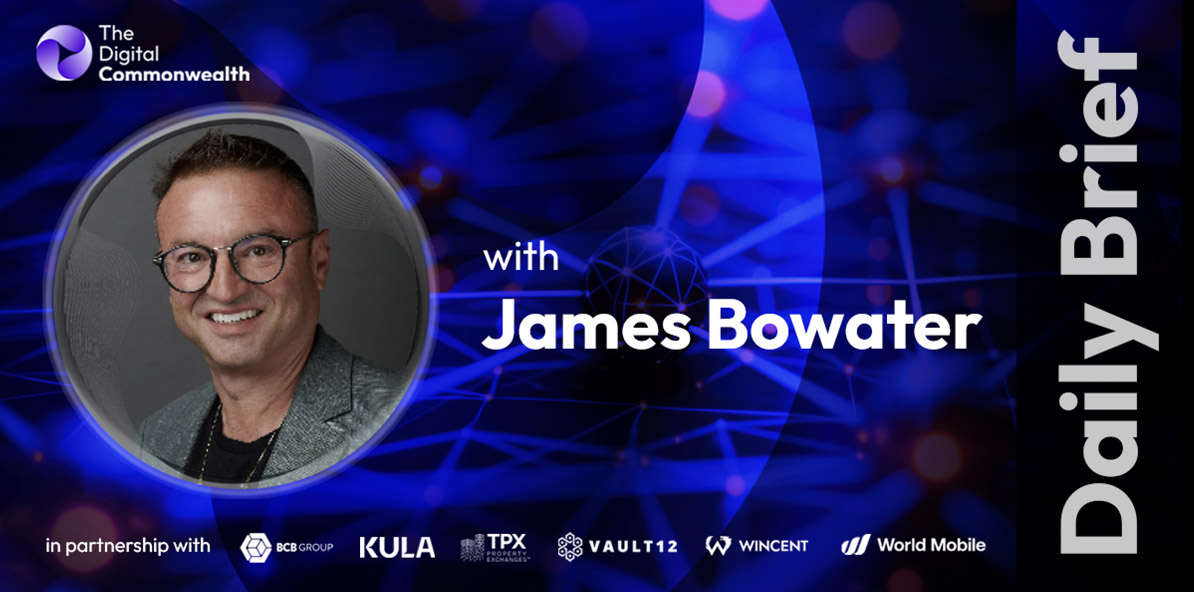
DCW DAILY BRIEF
Global Digital Assets, ScienceTech & Web3 Market Intelligence
Date: April 8th, 2026 │ Wednesday Edition #432
In partnership with BCB Group | Kula | TPX property Exchanges | Vault12 | Wincent | World Mobile
James Bowater
linkedin.com/in/james-bowater-b47612 | Twitter/X: X.com@TheDCW_JB
https://www.thedigitalcommonwealth.com/

Next Event: https://www.thedigitalcommonwealth.com/
📊 EXECUTIVE SUMMARY
Markets open on Wednesday, April 8th, 2026, Iran War Day 41, as President Trump's last-minute ceasefire announcement posted to Truth Social just before his 8 pm ET Tuesday deadline transforms the highest-risk geopolitical binary of Q2 2026 into an extraordinary global relief rally. At 8 pm ET Tuesday, Trump declared: "I agree to suspend the bombing and attack of Iran for a period of two weeks." Iran's Foreign Minister confirmed the Strait of Hormuz would reopen during the truce, contingent on all attacks being halted. Israel also agreed. The two-week ceasefire is conditional on "a complete, immediate, and safe opening of the Strait of Hormuz."
The market reaction has been swift and historic. WTI crude collapsed approximately 18% to under $93/bbl, its largest single-session fall in nearly six years. Brent fell 14% to around $94/bbl, unwinding weeks of war premium in a single session. Equity futures surged: Dow Jones futures rose 967 points (+2.1%), S&P 500 futures added 2.1%, and Nasdaq 100 futures climbed 2.3%. Asian markets rallied 4–6% on the news. European futures jumped more than 5%. The dollar weakened and bond yields fell as risk appetite returned, while gold, still pricing in geopolitical uncertainty, climbed toward a three-week high near $4,800/oz.
Crypto markets rallied sharply: Bitcoin vaulted past $72,000, its highest since before the conflict escalated, on $427 million in short liquidations, the largest 24-hour squeeze since the war began. ETH reached approximately $2,256 (+7.3%); XRP surged to $1.38 (+5.3%); SOL recovered to $84.56 (+6%); DOGE jumped to approximately $0.097 (+7.8%). Total crypto market cap reached approximately $2.52 trillion; BTC dominance held at 56.8%.
Five dominant narratives define Wednesday's session: (1) Trump Two-Week Iran Ceasefire Strait of Hormuz Reopening Confirmed: The conflict's most consequential de-escalation since hostilities began; WTI -18%; Brent -14%; Dow futures +967 points; BTC past $72,000; $427M in short liquidations; durability of the two-week framework now the central risk; (2) FDIC Advances Stablecoin Framework Draft Rules for Banks: Chair Travis Hill's proposal establishes reserve backing, redemption, capital treatment, and custody requirements for FDIC-supervised stablecoin issuers; landmark US banking sector integration milestone; (3) Ethereum Stablecoin Supply Surpasses $180 Billion: New all-time high; Ethereum retains approximately 60% of global stablecoin market; structural settlement layer status confirmed; (4) FBI: Americans Lost Record $11.36 Billion to Crypto Fraud in 2025: 22% year-on-year increase; investment fraud accounts for $7.2–8.6B; pig butchering scam compounds in Southeast Asia linked to organised crime networks; (5) UBS and Five Major Swiss Banks Launch Swiss Franc Stablecoin Sandbox: Coordinated traditional finance step into blockchain-based domestic currency; ZKB, Raiffeisen, PostFinance, BCV, Sygnum, and Swiss Stablecoin AG all participating.
Trump Two-Week Ceasefire Confirmed; Strait Reopening; Oil Collapse; BTC Past $72,000:
Trump posted on Truth Social at 8 pm ET Tuesday: "I agree to suspend the bombing and attack of Iran for a period of two weeks." Iran confirmed that the Strait of Hormuz will reopen under the truce, coordinated with its Armed Forces. WTI tumbled approximately 18% to under $93/bbl; Brent fell 14% to ~$94/bbl, the largest oil price drop in nearly six years. Dow futures +967 points; S&P 500 futures +2.1%; Bitcoin surged past $72,000 on $427 million in short liquidations. The ceasefire is premised on a "10-point proposal from Iran" that Trump described as "a workable basis on which to negotiate"; the framework's durability over the two-week window is now the primary market risk.
FDIC Stablecoin Framework; Ethereum $180B Stablecoin ATH; FBI $11.36B Crypto Fraud Record; UBS Swiss Franc Sandbox:
FDIC Chair Travis Hill proposes draft bank stablecoin rules covering reserve backing, redemption, capital, and custody requirements, the most significant US banking-sector digital asset regulatory advance of Q2 2026. Ethereum stablecoin supply hits $180 billion (new ATH), maintaining ~60% global market share. FBI IC3 data: Americans lost a record $11.36 billion to crypto fraud in 2025 (+22% year-on-year), with investment fraud accounting for the majority of losses. UBS and five Swiss banks launch a controlled sandbox for a Swiss franc stablecoin, the first coordinated major-bank step into blockchain-based domestic currency in Switzerland.
📰 TODAY'S HEADLINES
💹 MARKETS
- US stock futures surge post-ceasefire; Tuesday close barely positive as diplomacy held markets in suspense: The April 7 Tuesday regular session saw the S&P 500 eke out a gain of 0.08%, the Nasdaq Composite add 0.10%, and the Dow dip 85.42 points, as markets held in a binary positioning freeze ahead of Trump's 8 pm ET deadline. Post-announcement, futures surged: Dow +967 points (+2.1%), S&P 500 futures +2.1%, Nasdaq 100 futures +2.3%. Asian markets rallied 4–6% on Wednesday as news of the ceasefire spread, with gains led by energy-import-dependent economies. European futures jumped more than 5%, with airline and consumer cyclical sectors leading gains. The VIX, which had hovered near 26 through Tuesday's session, is expected to fall sharply at Wednesday's open as the immediate binary risk is resolved.
- WTI collapses approximately 18% to under $93/bbl; Brent falls 14% to ~$94/bbl, the largest oil drop in nearly six years; Strait of Hormuz reopening confirmed: The ceasefire announcement triggered the most dramatic single-session oil price move since April 2020. WTI crude futures tumbled from approximately $112/bbl in late Tuesday trading to under $93/bbl, the first time prices have fallen below $95 since before the conflict began. Brent slid from above $108/bbl to approximately $94/bbl (-14%). Iran's Foreign Ministry confirmed that safe transit through the Strait of Hormuz, through which approximately 20% of global oil flows, will be possible during the two-week truce, subject to coordination with Iran's Armed Forces. Goldman Sachs's CPI rule (every $10/bbl adds 0.3% US CPI) implies the oil collapse alone materially lowers the near-term US inflation trajectory, partially unwinding the stagflation premium that has dominated macro strategy since late February. Energy majors are expected to decline at Wednesday's open; airline and consumer-sensitive sectors stand to benefit from lower fuel costs.
- Gold climbs toward $4,800 three-week high despite risk-on; dollar weakens; bond yields fall as stagflation premium unwinds: Gold climbed toward a three-week high near $4,800/oz despite the broad risk-on move, reflecting lingering uncertainty over the durability of the two-week ceasefire and whether the framework can be converted into a lasting agreement. The dollar weakened as risk appetite improved, and US Treasury bond yields fell as the inflation premium tied to sustained oil above $100/bbl began to unwind. Analysts note that the Federal Reserve's April 28–29 FOMC meeting calculus shifts significantly: with WTI now under $93, the most acute stagflation pressure, Goldman's CPI model implied that every dollar of oil above $75 added to headline CPI, a dynamic that begins to reverse. The probability of a Fed rate-hike tail-risk scenario has materially declined; rate-cut expectations for H2 2026 are likely to be repriced higher at Wednesday's open.
- Asian markets rally 4–6%; European futures jump 5%+; defence stocks face sell-on-the-news correction; airlines surge: Asian markets rallied broadly on Wednesday, with energy-import-dependent economies, particularly Japan (95%+ crude import dependence), leading gains as the oil collapse improved terms of trade materially. The Nikkei and the broader MSCI Asia-Pacific index are expected to record their strongest single-session gains since the conflict began. European markets, heavily exposed to energy prices through industrial supply chains, are pricing a significant relief bounce. Within equity markets, sectors that served as geopolitical hedges, such as defence contractors (Lockheed Martin, Northrop Grumman, RTX), face sell-on-the-news corrections despite substantial order backlogs. Airlines (Delta, United), consumer cyclicals, and logistics companies are the primary beneficiaries. Delta Air Lines reports earnings before Wednesday's opening bell, the first major corporate earnings event in a post-ceasefire environment.
⚖️ REGULATORY & POLICY
- FDIC advances stablecoin framework. Chair Travis Hill unveils draft rules for banks: reserve backing, redemption, capital, and custody requirements. The Federal Deposit Insurance Corporation (FDIC) has proposed draft guidelines governing banks' engagement with stablecoins and related digital asset activities, according to remarks by Chair Travis Hill. The proposal, approved by the FDIC board and released for public consultation, establishes a framework for FDIC-supervised institutions to issue, manage, and provide services tied to payment stablecoins. The draft guidelines address key operational and financial risks, including requirements for reserve backing with high-quality assets, timely redemption into fiat currency, capital treatment, custody safeguards, and ongoing reporting and audit requirements. The framework marks a significant step in formalising US regulatory oversight of stablecoin-issuing banks, complementing the OCC's conditional approval of Coinbase's national trust charter and advancing the institutional digital-asset banking infrastructure in parallel with the GENIUS Act's legislative progress.
- Democrats press CFTC on Polymarket and Kalshi over military event contracts; CFTC Chair Selig asked to prevent offshore platforms from offering conflict bets: House Democrats sent a letter to Commodity Futures Trading Commission Chair Michael Selig asking what steps the agency can take to prevent prediction market platforms, including Polymarket and Kalshi, from offering contracts tied to sensitive real-world military events, following the circulation of contracts linked to the rescue of US airmen in Iran. Representatives Seth Moulton and Jim McGovern led the effort, arguing that allowing users to bet on bombings and military operations creates deeply problematic incentives. The letter focuses specifically on offshore platforms operating outside the US jurisdiction but accessible to global users. The development raises important regulatory questions for DCW members working on prediction market infrastructure and the boundaries of CFTC jurisdiction in the digital asset era.
- CLARITY Act SEC roundtable April 16; GENIUS Act advancing toward July 18; FCA FSMA 2000 gateway September 30, 2026: The SEC roundtable on the CLARITY Act remains scheduled for April 16, addressing which regulatory body, SEC or CFTC, oversees digital assets and codifying XRP's commodity classification. The GENIUS Act continues to advance toward its July 18 stablecoin market-cap target of more than $150 billion; the FDIC's stablecoin framework proposal adds an institutional track running in parallel with the legislative agenda. DCW members in the UK crypto sector continue to navigate dual-track MLR/FSMA 2000 decisions ahead of the 30 September 2026 FCA gateway opening, with the practical cut-off on July 31, 2027.
🤖 TECHNOLOGY & INNOVATION
- Ethereum stablecoin supply surpasses $180 billion, a new all-time high; Ethereum retains approximately 60% of the global stablecoin market. The total supply of stablecoins issued on the Ethereum network has surpassed $180 billion, reaching a new all-time high and reinforcing the blockchain's position as the dominant infrastructure for digital dollar liquidity. Ethereum now accounts for approximately 60% of the global stablecoin market, underscoring its continued leadership despite increasing competition from alternative blockchain networks, including Solana. The milestone reflects sustained growth in stablecoin adoption across trading, DeFi, and cross-border payments, and positions Ethereum as the core settlement layer for institutional digital asset infrastructure. Stablecoin supply growth on Ethereum continues to outpace issuance on competing chains in absolute terms, even as Solana's percentage share increases.
- Stablecoins reach $312 billion market cap, $33 trillion annual volume, with B2B payments surging from under $100 million to $6 billion per month since 2023: Stablecoins have reached a $312 billion market cap, a 60-fold increase since 2020, and now facilitate $33 trillion in annual transaction volume, according to Morph. B2B stablecoin payments have surged from under $100 million per month in early 2023 to over $6 billion per month by mid-2025, with B2B flows accounting for approximately $226 billion or 60% of identifiable real-economy stablecoin volume. Of corporate users, 41% report cost savings of at least 10%, while 77% cite supplier payments as their primary use case. Morph projects that annual stablecoin settlement volume will exceed $50 trillion by the end of 2026 and warns that by 2027, AI agents could become the largest category of transaction initiators, forcing SWIFT to launch its own stablecoin settlement layer.
- Lloyds Banking Group completes first quantum computing experiment to identify money mule networks using IBM 156-qubit processor: Lloyds Banking Group has completed the first known experiment into how quantum computing could help identify money mule networks. Over a nine-month project, Lloyds' quantum team, including a working group of Quantum Ambassadors with qualifications in physics, mathematics, and computer science, worked alongside IBM's specialists using an IBM 156-qubit quantum computer. The experiment tested multiple quantum algorithms on anonymised transactional data to identify patterns of known money-mule behaviour within a larger graph. The solution successfully identified a real money mule deliberately embedded in the data as a validation control. The result demonstrates a practical pathway for quantum-enhanced financial crime detection, adding to the growing body of applied quantum finance research alongside Algorand's post-quantum FALCON cryptographic work.
- Circle expands stablecoin payments in Asia with Singapore Payouts API launch, first deployment outside the United States: Circle has expanded its stablecoin-based payment services in Asia with the launch of its Payouts API in Singapore, the first deployment of this infrastructure outside the United States. Circle Mint Singapore partners can now access third-party payout capabilities through a locally regulated platform, allowing payment service providers, fintech firms, and enterprises to manage cross-border USDC transactions. Circle Internet Singapore operates under a Major Payment Institution licence issued by the Monetary Authority of Singapore (MAS), and the framework complies with Travel Rule obligations. The expansion localises services previously onboarded through Circle's US entity, reducing latency and operational complexity for Asian clients and positioning Singapore as the regional hub for Circle's Asia expansion strategy.
🏢 INSTITUTIONAL & CORPORATE
- FBI: Americans lost a record $11.36 billion to crypto fraud in 2025 22% year-on-year increase; investment fraud accounts for $7.2–8.6 billion; older Americans disproportionately affected: Americans lost a record $11.36 billion to cryptocurrency-related fraud in 2025, according to FBI Internet Crime Complaint Center (IC3) data, a 22% increase from the prior year and the highest annual crypto fraud loss on record. Total reported cybercrime losses reached approximately $20.87 billion (+26% year-on-year), with crypto accounting for a substantial share. The IC3 received more than one million complaints, with over 181,000 involving cryptocurrency. Investment-related fraud, predominantly pig-butchering schemes using social engineering via social media and dating applications, accounted for an estimated $7.2–8.6 billion. Victims are typically shown fabricated dashboards displaying gains before withdrawal access is blocked. Law enforcement has linked many operations to organised criminal networks in Southeast Asia. Americans aged 60 and above reported losses of approximately $7.7 billion, making them the most impacted demographic. For DCW members in compliance and consumer protection roles, the scale of crypto-related fraud is now a systemic risk that requires a sector-wide response.
- UBS and five major Swiss banks launch sandbox to test Swiss franc stablecoin ZKB, Raiffeisen, PostFinance, BCV, Sygnum, and Swiss Stablecoin AG participating: UBS, PostFinance, Sygnum, Raiffeisen, Zürcher Kantonalbank (ZKB), and Banque Cantonale Vaudoise (BCV) have partnered to test a Swiss franc-denominated stablecoin, marking the most coordinated step yet by Swiss traditional financial institutions into blockchain-based domestic currency. The initiative, developed in collaboration with Swiss Stablecoin AG, will launch a controlled sandbox environment in 2026 to evaluate stablecoin issuance and functionality. Switzerland currently lacks a widely adopted Swiss franc stablecoin, leaving domestic institutions reliant on foreign-currency digital assets for on-chain settlement. The sandbox is designed as a live but controlled testing environment, enabling participating institutions to experiment with stablecoin functionality while managing operational and regulatory risk. The development is directly relevant to DCW members advising on European stablecoin strategy under MiCA's regulatory framework.
📈 MARKET OVERVIEW
🌐 TOTAL CRYPTO MARKET CAP: ≈$2.52 TRILLION
24h Change: Two-week US–Iran ceasefire confirmed at 8 pm ET Tuesday; WTI -18%; Brent -14%; Bitcoin vaults past $72,000 on $427 million in short liquidations the largest single-day squeeze since the conflict began; global risk-on relief rally across equities, crypto, and risk assets; stagflation premium unwinds as oil falls below $95/bbl for the first time since February. Bitcoin Dominance: ≈56.8%
₿ BITCOIN (BTC) Price: ≈$72,000 (+4.8%; Ceasefire-Driven Short Squeeze; $427M Liquidations; Hormuz Reopening Confirmed; ⬆)
24h Volume: ≈$45B │ Market Cap: ≈$1.43 Trillion │ 24h Range: ≈$68,600–$72,500
Bitcoin vaulted past $72,000 on Wednesday as Trump confirmed a two-week ceasefire with Iran, and the reopening of the Strait of Hormuz triggered the largest 24-hour short squeeze since the conflict began: $427 million in short liquidations across crypto markets. The rally takes BTC to its highest level since the early stages of the conflict and breaches the $70,000–$73,000 resistance zone that has capped five weeks of attempted breakouts. Monday's $471M ETF inflow, the largest since February, confirmed institutional capital was positioned to redeploy on de-escalation signals; Wednesday's overnight move validates that thesis. The $65,000–$73,000 range that defined six weeks of binary oscillation now has a clear topside breakout attempt. The ceasefire's durability over the two-week window and whether Iran maintains the Strait's opening while negotiations proceed are the primary near-term risks. Key support: $69,000–$70,000; resistance: $73,000–$75,000; critical catalyst: two-week ceasefire durability and Strait normalisation.
Ξ ETHEREUM (ETH) Price: ≈$2,256 (+7.3%; Ceasefire Relief Rally; BlackRock ETHB April SEC Decision; $180B Stablecoin ATH)
24h Volume: ≈$19.5B │ Market Cap: ≈$271 Billion │ 24h Range: ≈$2,104–$2,270
Ethereum is at approximately $2,256 (+7.3%), benefiting from the broad risk-on ceasefire rally and its own structural catalyst: Ethereum stablecoin supply has now surpassed $180 billion, a new all-time high confirming Ethereum's role as the dominant settlement layer for global dollar-denominated digital liquidity. The BlackRock ETHB staking ETF SEC decision is approaching in April, a near-term catalyst that adds option value. The Google Quantum AI whitepaper's identification of ETH wallet and smart contract exposure continues to represent a medium-term security narrative overhang, with Algorand's FALCON post-quantum approach adding comparative context. The $2,000 structural floor has held through the entire conflict period; the ceasefire rally now opens the path toward $2,300–$2,400 resistance. Glamsterdam hard fork targets June 2026; ETH retains 61.4% RWA market share ($206B+). Critical support: $2,150–$2,200; resistance: $2,300–$2,400.
🔷 XRP Price: ≈$1.38 │ 24h Volume: ≈$2.4B │ Market Cap: ≈$80B
XRP is at approximately $1.38 (+5.3%) on Wednesday, benefiting from the broad ceasefire-relief rally and, specifically, from the improving regulatory pipeline. XRP's failure to hold above $1.35 during Monday's rally confirmed sellers were in control; Wednesday's move decisively reclaimed that level and added momentum ahead of the CLARITY Act SEC roundtable on April 16. RLUSD market cap remains above $1 billion. Seven live XRP ETFs have recorded cumulative inflows of $1.44 billion since November 2025. The CLARITY Act roundtable on April 16 remains the primary near-term structural catalyst, specifically the codification of XRP's commodity classification and the regulatory jurisdiction framework. Critical support: $1.32–$1.35; resistance: $1.42–$1.45.
◎ SOLANA (SOL) Price: ≈$84.56 (+6%; Ceasefire Rally; Alpenglow on Schedule; Drift Hack Overhang Remains)
24h Volume: ≈$4.2B │ Market Cap: ≈$48.5B
Solana is at approximately $84.56 (+6%), recovering strongly on Wednesday's ceasefire rally. The $285 million Drift Protocol exploit attributed to North Korean hackers on April 1, which dropped Drift's TVL from $530 million to $230 million, remains a structural overhang on Solana's ecosystem security narrative, even as the broader macro relief trade lifts all assets. The USDC issuance surge of $3.25B in one week and $10B+ over the past month remains the most significant structural positive for liquidity in the Solana ecosystem. The Alpenglow consensus upgrade (100–150ms finality; 98.27% validator approval) remains on schedule. Morgan Stanley SOL ETF remains under SEC review. On-chain activity metrics continue to lag 2024 highs despite the USDC supply surge. Critical support: $80–$82; resistance: $87–$90.
🔺 CARDANO (ADA) Price: ≈$0.268 │ 24h Volume: ≈$590M │ Market Cap: ≈$9.9B
Cardano is at approximately $0.268, recovering toward the top of its $0.24–$0.27 range on the ceasefire rally. The SEC's digital commodity classification, confirming that ADA staking is not a securities event, remains a structural positive. Midnight privacy partner chain mainnet, Circle's USDCx stablecoin integration, and the Leios scaling upgrade targeting approximately 1,000 TPS remain the medium-term catalysts. The ceasefire confirmation removes the primary headwind of binary geopolitical risk, which had suppressed risk appetite across the alt-cap space.
💛 DOGECOIN (DOGE) Price: ≈$0.097 (+7.8%; Ceasefire Macro Barometer; X Money April Launch; Retail Sentiment Re-Engagement)
24h Volume: ≈$1.6B │ Market Cap: ≈$14.9B
Dogecoin is at approximately $0.097 (+7.8%), posting one of the strongest large-cap gains on Wednesday as the ceasefire confirmation drives retail sentiment re-engagement, the precise catalyst DCW has identified as the necessary condition for meme-cap sector outperformance. DOGE remains the highest-beta macro sensitivity gauge among large-cap digital assets. The X Money/X Payments April launch with crypto-native design lead Benji Taylor remains the primary near-term structural catalyst for DOGE adoption beyond its speculative function. A sustained ceasefire confirmation, with oil below $95/bbl, equity above 6,700, and BTC above $73,000, would be the optimal environment for DOGE to test the $0.11–$0.12 resistance—critical support: $0.090–$0.093.
😨 CMC Crypto Fear & Greed Index: ~35–46 (Neutral Transitioning; Ceasefire Catalyst Active)
Wednesday's Fear & Greed reading reflects the transitional moment between six weeks of binary war-driven positioning and the opening phase of a ceasefire-contingent relief rally. The index was at approximately 46 (neutral), up from 32 last week's session before the ceasefire announcement. The post-announcement environment is expected to push the index meaningfully higher at Wednesday's open, reflecting the first structural positive macro development since the conflict began. April has historically been Bitcoin's strongest calendar month (average +20.9% in positive years; green in 10 of 15 years); the ceasefire removes the primary constraint on seasonal momentum. The key question for the index over the next two weeks is whether ceasefire durability, Iran maintaining the Strait of Hormuz opening, and negotiations advancing sustain risk appetite, or whether diplomatic fragility returns the index to the Fear zone.
🏛️ TRADITIONAL MARKETS CONTEXT
Wednesday's session is defined by the transformation of Tuesday's binary tension into a historic relief rally. The April 7 Tuesday close: S&P 500 +0.08%, Nasdaq Composite +0.10%, Dow -85.42 points, barely captured the late-session optimism generated by Pakistan's request for a two-week deadline extension, which caused the S&P 500 to erase an intraday 1.2% decline. Within hours of the close, Trump's Truth Social ceasefire post rewrote the market landscape entirely.
Post-announcement, Dow futures rose 967 points (+2.1%), S&P 500 futures added 2.1%, and Nasdaq 100 futures climbed 2.3% recapturing the S&P 500's all-time-high trajectory that had been disrupted by six weeks of conflict. WTI fell approximately 18% to under $93/bbl in the largest single-session oil price move in nearly six years, and Brent declined 14% to approximately $94/bbl. Iran's Supreme National Security Council confirmed the Strait of Hormuz would reopen for two weeks, contingent on all attacks being halted.
The ceasefire's economic significance is immediate and structural. Goldman Sachs's CPI rule (every $10/bbl adds 0.3% US CPI) now operates in reverse: WTI declining from approximately $115 to under $93 implies a material disinflationary impulse that could reduce headline US CPI by up to 0.65 percentage points if sustained. Bank of America's central scenario oil above $100/bbl through 2026 is now under significant pressure. For the Federal Reserve, the FOMC meeting on April 28–29 now faces a fundamentally different macro backdrop: the stagflation bind that has defined six weeks of monetary policy calculus is partially, though not yet fully, unwound. The durability of the two-week framework is the critical variable.
Delta Air Lines reports earnings on Wednesday before the bell, the first major corporate earnings in the post-ceasefire environment. Defence contractors (Lockheed Martin, Northrop Grumman, RTX) face sell-on-the-news corrections despite their substantial Q1 2026 order backlogs. Airlines, consumer cyclicals, and logistics benefit directly from lower fuel costs.
💡 DCW INTELLIGENCE & INSIGHTS
Iran War Day 41: Trump's Two-Week Ceasefire Transforms the Market Landscape; FDIC Stablecoin Framework Is the Week's Structural Regulatory Milestone; Crypto's $427M Short Squeeze Opens the Path to New Range.
First, Trump's confirmed two-week ceasefire is categorically different from every previous deadline and extension cycle, because for the first time, both sides have publicly confirmed a de-escalation framework with a specific deliverable: the reopening of the Strait of Hormuz. Since February 28, the conflict's structure has been one of sequential escalation and extension: 48 hours, 5-day extension, 10-day extension, 48-hour reset, the April 7 "final" deadline. Each iteration built binary risk into market positioning without resolving the underlying disruption. The April 7 ceasefire breaks this pattern by converting a "final" deadline into a "workable basis" for negotiation. DCW's updated three-scenario framework: (a) ceasefire holds and Hormuz normalises over two weeks (Brent toward $85–$90; BTC above $75,000; sustained risk-on recovery); (b) ceasefire breaks down within the two-week window (oil retraces toward $105–$115; BTC returns to $65,000–$68,000; binary risk reinstated); (c) ceasefire holds but negotiations stall, creating a rolling extension framework (oil ranges $90–$100; markets price partial resolution; crypto consolidates $70,000–$75,000). Scenario (a) is now the market's base case, but the fragility of the framework, conditional on Iran's Armed Forces coordinating Strait transit, means scenario (b) tail risk remains material.
Second, the FDIC's stablecoin framework proposal is the most significant US banking-sector digital asset development since the OCC's conditional approval of Coinbase's national trust charter. Where the OCC charter establishes a federal regulatory framework for digital asset custody and settlement at the operating-company level, the FDIC's framework addresses the other half of the institutional equation: how commercial banks themselves, as deposit-taking and lending institutions, can engage in stablecoin issuance, management, and custody services. The draft requirements for full reserve backing with high-quality assets, timely redemption, capital treatment, and audit obligations are designed to give the market confidence in bank-issued stablecoins without the systemic risks associated with fractional-reserve exposure to digital assets. Taken together with the GENIUS Act's stablecoin market-cap target of $150B+, the Coinbase OCC charter, and the SEC safe harbour now at OIRA, the US regulatory pipeline is converging on a framework that would fully institutionalise stablecoin infrastructure within the traditional banking system.
Third, the crypto market's $427 million in short liquidations on Wednesday morning, its largest single-session squeeze since the conflict began, has both technical and geopolitical significance. The $70,000–$73,000 resistance zone that has capped five consecutive weekly close attempts is now being breached from below. Institutional ETF inflows of $471M on April 6 (the highest since February) had demonstrated that capital was positioned to redeploy on de-escalation. The short liquidation event converts that latent institutional demand into a price-discovery moment. The critical question for crypto markets over the next two weeks is whether ceasefire durability allows the macro overhang to fully unwind, unwinding the remaining $270–$300M in estimated short positions, or whether diplomatic fragility reasserts the binary positioning freeze. DCW members should monitor: (a) Strait transit normalisation data over the coming week; (b) FOMC expectations repricing as oil declines; (c) BTC sustained hold above $70,000 as the structural inflexion confirmation signal.
🔴 ELEVATED RISKS: Geopolitical, Macro & Market
🟢 POSITIVE DEVELOPMENTS: Structural & Regulatory
Ceasefire Durability Two-Week Framework Fragility:
The truce is conditional on Iran's Armed Forces coordinating Strait transit; a single incident could collapse the framework; market scenario (b) oil back to $105–$115, BTC to $65K remains a live tail risk; a two-week window is not a permanent resolution
Crypto Ecosystem Security Drift Protocol Hack Overhang:
$285M exploit on Solana-based Drift Protocol (April 1) attributed to North Korean hackers; TVL dropped from $530M to $230M; institutional reassessment of Solana ecosystem security risk ongoing despite ceasefire-driven price recovery
FBI $11.36B Crypto Fraud Record Systemic Consumer Risk:
22% YoY increase in US crypto fraud losses (2025); pig-butchering scams via Southeast Asia criminal networks; $7.7B lost by over-60s; scale now a systemic reputational and regulatory risk for the digital asset sector
Democrats Press CFTC on Prediction Market Contracts:
Congressional pressure on Polymarket/Kalshi over military event betting contracts; regulatory uncertainty for prediction market infrastructure; CFTC Chair Selig under pressure to extend oversight to offshore platforms accessible to US users
Trump Two-Week US–Iran Ceasefire Confirmed; Strait Reopening:
WTI -18% to under $93; Brent -14% to ~$94; Dow futures +967 points; BTC past $72,000; $427M short liquidations; stagflation premium begins to unwind; oil below $95 opens path to Fed rate cut repricing
FDIC Stablecoin Framework Draft Bank Rules Published:
Reserve backing, redemption, capital treatment, and custody requirements for FDIC-supervised stablecoin issuers; complements the OCC charter and GENIUS Act legislative track; full institutionalisation of US stablecoin infrastructure advancing on all fronts
Ethereum Stablecoin Supply $180B ATH; ~60% Global Market Share:
Structural settlement layer status confirmed; ETHB BlackRock staking ETF April SEC decision approaching; Glamsterdam June 2026; RWA market share 61.4% ($206B+); $180B ATH reinforces institutional confidence
Stablecoin B2B Payments Surge; $33T Annual Volume; Circle Singapore Launch:
B2B stablecoin payments grew from under $100M/month (2023) to $6B+/month (mid-2025); Circle Payouts API live in Singapore under MAS licence; Swiss franc stablecoin sandbox launched by UBS and five major Swiss banks; structural payment rail adoption confirmed across TradFi
🌍 GLOBAL MONETARY POLICY & MACROECONOMIC
Wednesday's macro environment is defined by the partial but significant unwinding of the stagflation premium that has dominated global markets since late February. The ceasefire and reopening of the Strait of Hormuz, conditional on Iran's coordination, remove the acute supply shock that had driven WTI from approximately $75/bbl to $115/bbl over six weeks. With WTI now under $93/bbl, Goldman Sachs's CPI rule implies a material disinflationary impulse: every $10/bbl decline reduces US CPI by approximately 0.3 percentage points, meaning a sustained decline toward $85–$90 could reverse the equivalent of 80–90 basis points of oil-driven inflation that has accumulated since the conflict began.
The Federal Reserve's April 28–29 FOMC meeting now faces a fundamentally different macro backdrop. The stagflation bind, oil-driven inflation calling for tighter policy, while growth deterioration called for easing, was the defining constraint. With WTI below $95, the acute inflation case for a rate hike is materially weakened. Bank of America's central scenario of oil above $100/bbl through 2026 is under pressure. The 40–50% tail-risk probability of a Fed rate hike by September, which DCW has flagged since mid-March, has declined materially. However, it cannot be entirely dismissed given the ceasefire's two-week conditional structure.
Goldman Sachs's 35% recession probability, the OECD's 4.2% US 2026 CPI revision, and the 10-year Treasury yield at 4.35% (up 40 basis points since the conflict began) now represent scenarios that markets will begin to reprice at Wednesday's open. Bond yields are expected to fall as inflation expectations unwind; the dollar is expected to weaken as risk appetite recovers. The Beige Book on April 15 and the FOMC meeting on April 28–29 remain the next policy communication inflexion points. Still, the parameters of those communications have shifted significantly from Tuesday's closed-off binary.
📰 Other News Stories
- Tuesday, April 7, close: S&P 500 +0.08% (eked out a gain); Nasdaq Composite +0.10%; Dow -85.42 points (-0.18%); VIX ≈26; post-ceasefire announcement: Dow futures +967 points (+2.1%), S&P 500 futures +2.1%, Nasdaq 100 futures +2.3%; Asian markets +4–6%; European futures +5%+
- WTI crude: tumbled ~18% to under $93/bbl post-ceasefire, largest single-session oil move in nearly six years; Brent -14% to ~$94/bbl; Goldman Sachs CPI rule: sustained $93/bbl implies material disinflationary reversal; OPEC+ May quota increase of 206,000 bpd now less relevant as Hormuz reopening commences
- BTC ≈$72,000 (+4.8%); ETH ≈$2,256 (+7.3%); XRP ≈$1.38 (+5.3%); SOL ≈$84.56 (+6%); DOGE ≈$0.097 (+7.8%); total market cap ≈$2.52T; BTC dominance ≈56.8%; $427M in short liquidations; CMC Fear & Greed transitioning from fear (~32) upward post-ceasefire
- Trump Truth Social post at 8 pm ET Tuesday: "I agree to suspend the bombing and attack of Iran for a period of two weeks"; received "10 point proposal from Iran" described as "workable basis"; "double sided CEASEFIRE"; Iran's Foreign Minister confirmed Strait of Hormuz reopens during truce; Israel agreed; ceasefire conditional on "complete, immediate, and safe" Strait opening
- FDIC Chair Travis Hill proposes draft stablecoin rules for banks: full reserve backing with high-quality assets, timely redemption, capital treatment, custody safeguards, reporting and audit requirements; framework approved by the FDIC board; released for public consultation; most significant US banking-sector digital asset regulatory advance of Q2 2026
- FBI IC3 data: Americans lost $11.36B to crypto fraud in 2025 (+22% YoY); record annual high; investment fraud $7.2–8.6B; over 181,000 crypto-related complaints; Southeast Asia pig-butchering networks linked; over-60s lost $7.7B most impacted demographic; total cybercrime losses $20.87B (+26%)
- Ethereum stablecoin supply surpasses $180B new all-time high; ~60% global stablecoin market share; dominant settlement layer status reinforced; BlackRock ETHB staking ETF April SEC decision approaching; Glamsterdam hard fork June 2026; ETH RWA market share 61.4% ($206B+)
- Stablecoin market: $312B market cap; $33T annual transaction volume; B2B payments from <$100M/month (early 2023) to $6B+/month (mid-2025); 41% of corporate users report ≥10% cost savings; Morph projects $50T+ annual settlement by end-2026; SWIFT stablecoin layer by 2027 predicted
- UBS, PostFinance, Sygnum, Raiffeisen, ZKB, BCV + Swiss Stablecoin AG: Swiss franc stablecoin sandbox 2026 launch; Switzerland's first coordinated major-bank blockchain currency initiative; addresses domestic gap in franc-denominated on-chain settlement
- Circle expands Singapore Payouts API: first deployment outside US; Circle Mint Singapore under MAS Major Payment Institution licence; USDC cross-border payout infrastructure for Asia-based PSPs, fintechs, and enterprises; Travel Rule compliant
- Lloyds Banking Group: first quantum computing experiment to detect money mule networks; IBM 156-qubit processor; nine-month project; successfully identified embedded money mule in anonymised transaction graph; Quantum Ambassadors working group established; applied quantum finance use case confirmed
- Democrats press CFTC (Chair Selig) on Polymarket/Kalshi military event contracts; Reps. Moulton and McGovern letter; concern over offshore platforms accessible to global users; contracts tied to rescue of US airmen in Iran cited; "deeply sick" to bet on bombings McGovern; regulatory jurisdiction questions raised
- CLARITY Act SEC roundtable April 16; GENIUS Act July 18; FCA FSMA 2000 gateway September 30, 2026; SEC crypto safe harbour at OIRA approaching publication; BlackRock ETHB staking ETF April decision; Morgan Stanley SOL ETF under SEC review
- Delta Air Lines reports earnings on Wednesday before open, the first major corporate earnings in the post-ceasefire environment; airlines and consumer cyclicals are the primary beneficiaries of WTI below $93; defence contractors (LMT, NOC, RTX) face sell-on-the-news corrections
📊 The Crypto Narrative
- Iran War Day 41 ceasefire confirmation is the structural inflexion the crypto market has waited six weeks to price: WTI -18%; Brent -14%; $427M in short liquidations; BTC past $72,000; binary positioning freeze lifted; Strait of Hormuz reopening confirmed conditional on Iran's Armed Forces coordination; the two-week framework durability is now the central risk variable; scenario (a) sustained ceasefire, BTC above $75,000 is now the market's base case
- FDIC stablecoin bank rules advance: the most significant US banking-sector digital asset regulatory development of Q2 2026; reserve backing, redemption, capital treatment, and custody requirements establish the framework for commercial bank stablecoin issuance; combined with OCC charter, SEC safe harbour at OIRA, CLARITY Act roundtable (April 16), and GENIUS Act (July 18), the four-pillar US institutional digital asset regulatory infrastructure is advancing simultaneously; DCW members should monitor FDIC consultation outcomes and OIRA safe harbour publication as the parallel near-term catalysts
- Bitcoin ≈$72,000 (+4.8%); $70,000–$73,000 resistance breached from below on ceasefire news; $427M short liquidations validate institutional re-deployment thesis confirmed by $471M ETF inflow on April 6; the $65,000–$73,000 range that defined six weeks of geopolitical oscillation now transitions to $70,000–$75,000 consolidation; sustained Strait normalisation is the single largest remaining catalyst for a breakout above $75,000
- Ethereum ≈$2,256 (+7.3%); $180B stablecoin ATH on Ethereum reinforces structural settlement layer thesis; BlackRock ETHB staking ETF April SEC decision is the primary institutional catalyst; quantum security narrative (Google whitepaper) remains medium-term overhang; Glamsterdam June 2026 adds technical upgrade option value; $2,200–$2,300 now the key structural zone
- XRP ≈$1.38 (+5.3%); ceasefire rally reclaims $1.35 level decisively the resistance that rejected Monday's breakout attempt; CLARITY Act SEC roundtable April 16 is the defining near-term regulatory catalyst; RLUSD above $1B; seven live ETFs with $1.44B cumulative inflows; $1.35–$1.40 now structural support; resistance: $1.42–$1.45
- SOL ≈$84.56 (+6%); ceasefire rally overlaps with structural positive of USDC $3.25B weekly minting; Drift Protocol hack overhang ($285M exploit, North Korea-linked) remains a Solana-specific security narrative risk even as prices recover; Alpenglow upgrade on schedule; Morgan Stanley ETF under SEC review; $82–$85 now key support zone on consolidation
- Stablecoin $312B market cap + $33T annual volume + FDIC framework + Ethereum $180B ATH + Circle Singapore launch + UBS Swiss franc sandbox = the week's convergent stablecoin narrative: the structural integration of stablecoins into both institutional banking infrastructure and real-economy B2B payment rails is advancing across every major jurisdiction simultaneously; the $316B stablecoin market represents the latent capital layer now beginning to redeploy into risk assets on conflict resolution
📅 Looking Ahead April–May 2026
Key Events and Catalysts:
This Week and Immediate:
The two-week US–Iran ceasefire framework is now the single highest-known-risk event for Q2 2026 in its durability dimension, having resolved its binary outcome. Watch points: (a) whether Iran maintains coordinated Strait of Hormuz transit over the coming week and shipping normalises; (b) whether BTC sustains hold above $70,000 on ceasefire confirmation as the structural inflexion signal; (c) FOMC expectations repricing at the April 28–29 meeting as oil declines below $95; (d) Delta Air Lines earnings Wednesday as the first post-ceasefire corporate earnings signal; (e) FDIC stablecoin framework public consultation timeline.
April–May 2026:
The BlackRock ETHB staking ETF SEC decision is approaching in April. The CLARITY Act SEC roundtable is scheduled for April 16. The SEC crypto safe harbour, now at OIRA, will be published in the near term. The GENIUS Act continues to advance toward its July 18 stablecoin market-cap target of more than $150 billion. The FDIC stablecoin framework public consultation is now open. The FCA's FSMA 2000 authorisation gateway opens on 30 September 2026; DCW members must finalise MLR/FSMA pathway strategy before the 31 July 2027 practical cut-off. Ethereum's Glamsterdam hard fork targets June 2026. CONV£RGENCE London at Mansion House on April 22.
Q2 2026 Broader Themes:
The April 7 8 pm ET ceasefire confirmation as the defining structural inflexion of the conflict transitioning from six weeks of binary geopolitical risk-management into a two-week negotiation framework with a clear deliverable (Strait normalisation); the convergent stablecoin institutional narrative of FDIC framework, Ethereum $180B ATH, USDC $10B+ Solana monthly issuance, Circle Singapore launch, and UBS Swiss franc sandbox as the clearest evidence to date that stablecoin infrastructure is simultaneously advancing inside traditional banking and across global payment rails; the FBI $11.36B fraud record as the industry's most urgent consumer protection challenge requiring coordinated sector response; and CONV£RGENCE London at Mansion House on April 22 as DCW's flagship convening at the peak of this geopolitical and digital asset inflexion moment.
CONV£RGENCE London and The Digital Commonwealth Awards 2026
In partnership with Datavault AI, Inc.
Where the World's Digital Future Comes Together at Mansion House, London.
Limited number of tickets available via the link
🏟️ 🔗 https://luma.com/8weeiwua
At the heart of the City of London, The Digital Commonwealth convenes the innovators, policymakers, and investors shaping the next era of responsible digital growth.
DCW's CONV£RGENCE 2026 London Forum at Mansion House (April 22nd) will convene leading voices at the intersection of these converging themes.
ℹ️ About The Digital Commonwealth
The Digital Commonwealth Limited (DCW) is an independent industry organisation representing AI, Blockchain, DePIN, Digital Assets, ScienceTech, and Web3 sectors across our Community. Through strategic initiatives, including the Mansion House Summit Series, DCW Weekly Roundup research, DCW Cover insurance services, DCW Frontier Focus newsletter, and comprehensive advisory functions, we drive innovation, education, and collaboration across the digital economy ecosystem.
DCW's mission is to facilitate dialogue among industry stakeholders, policymakers, and regulators, whilst providing members with cutting-edge research, networking opportunities, and market intelligence. Our events bring together leading voices from traditional finance, technology innovation, and regulatory bodies to advance thoughtful frameworks supporting responsible digital asset adoption.
📧 Contact Information
Email: info@thedigitalcommonwealth.com
Website: https://www.thedigitalcommonwealth.com/
Twitter/X: X.com@TheDCW_X
⚠️ Disclaimer
This briefing is provided for informational purposes only and does not constitute investment advice, financial advice, trading advice, or any other sort of advice. The Digital Commonwealth Limited does not recommend that any cryptocurrency or digital asset be bought, sold, or held by you. Conduct your own due diligence and consult your financial adviser before making any investment decisions. Past performance is not indicative of future results.
The information contained in this briefing has been compiled from sources believed to be reliable. Still, DCW makes no representation or warranty, express or implied, as to its accuracy, completeness, or correctness. All views and opinions expressed herein are those of the authors and do not necessarily reflect the views of The Digital Commonwealth Limited or its affiliates.
EAJW © 2026 The Digital Commonwealth Limited. All rights reserved.


